Skinny fat: should you bulk, cut or recomp first?
What skinny fat is, how to tell, and whether to bulk, cut or recomp first, with the outcome each path gives the same example body after six months.
Updated 9 min readFigures computed by the Month6 engine
On this page · 7 sections
Skinny fat is the most common starting point in any gym and the least talked about. Clothes fit, the scale reads normal, and yet the mirror shows soft arms, a soft middle and very little shape. The usual advice splits three ways: eat more and lift, eat less and lose it, or do both at once. All three get recommended with total confidence, often in the same comment thread.
This post works through the choice with numbers rather than opinions. Every figure below comes from the same arithmetic the Month6 app runs on your own stats: the cited muscle-gain rates, the calorie and protein settings for each goal, and the floors the engine refuses to cross. The bodies are invented examples, labelled as such, so you can see how each path plays out before you pick one.
What is skinny fat?
Skinny fat describes a body with a normal weight but a low share of muscle and a higher share of fat than its owner would like. It is not a medical category and it is not a body type you are stuck with. It is a starting composition: not much lean tissue yet, and some fat sitting where muscle would usually give shape.
The reason it confuses people is that weight alone hides it. Two people at the same height and weight can look completely different, because one carries more muscle and the other more fat. The scale only reports the total. That is why skinny-fat people are often told they are fine by every chart that uses weight, and still feel unhappy with what they see.
Most skinny-fat lifters have one thing in common: they have not trained with weights consistently yet, or they trained without adding load over time. That is good news. It means the fastest muscle-building phase of their lifting life is still ahead of them, and the projection engine plans for it, using the beginner rate of 0.8–1.2 kg of muscle a month for men and 0.4–0.6 kg for women.
Am I skinny fat?
There is no single cut-off, and Month6 does not invent one. A few signs show up again and again, and if most of them describe you, the label fits well enough to plan around:
- Your weight sits in the ordinary range for your height, but shirts fit loosely at the shoulders and snugly at the waist.
- You have little visible definition in the arms, chest or back, even when relaxed in good light.
- Most of the fat you would like to lose sits around the middle and hips rather than spread evenly.
- You have never followed a lifting plan that added weight or reps week after week.
- Dieting in the past made you smaller, but not more defined.
The last sign matters most. If you have already lost weight and ended up a smaller version of the same shape, that is a strong hint that the missing ingredient is muscle, not a lower number on the scale.
To track it honestly, stop relying on the scale alone. A tape around the waist, the same photo in the same light every few weeks, and the weights you lift tell you far more. The app's weekly check-in asks for exactly those, and the Month 6 projection draws your own figure from a body-fat estimate rather than from weight.
Should a skinny-fat person bulk or cut?
Here are the two realistic paths for two skinny-fat example bodies, read from the same engine at month six. The man is a 24-year-old man (178 cm, 72 kg, 24% body fat) who has never lifted; the woman is a 24-year-old woman (165 cm, 58 kg, 30% body fat) who has never lifted.
| Example body and goal | Muscle | Fat | Body fat |
|---|---|---|---|
| Man, bulk | +5.8 kg | +1.6 kg | 24% → 23.8% |
| Man, recomp | +2.9 kg | −2.9 kg | 24% → 20% |
| Woman, bulk | +2.9 kg | +2.9 kg | 30% → 31.8% |
| Woman, recomp | +1.4 kg | −1.4 kg | 30% → 27.5% |
The man is a 24-year-old man (178 cm, 72 kg, 24% body fat) who has never lifted; the woman a 24-year-old woman (165 cm, 58 kg, 30% body fat) who has never lifted.
A bulk builds muscle about twice as fast. It runs calories 12.5% above maintenance and aims for the scale to climb by 0.375% of body weight a week. The engine caps each week so that no more fat is added than muscle. For the man that means body fat percentage barely moves, from 24% to 23.8%, while the scale climbs by 7.4 kg (16.3 lb).
A recomp holds calories at maintenance, so the scale stays flat. Muscle comes more slowly, but the fat comes off at the same time. For the man, that is 2.9 kg (6.4 lb) of muscle and 2.9 kg (6.4 lb) of fat by month six, which is a visible change for someone starting from very little muscle.
% body fat. Invented example bodies; estimates from the Month6 engine that assume at least 80% adherence.
| Series | Day 1 | Month 3 | Month 6 | Month 12 |
|---|---|---|---|---|
| Bulk | 24 % body fat | 23.8 % body fat | 23.8 % body fat | 24.4 % body fat |
| Recomp | 24 % body fat | 22 % body fat | 20 % body fat | 16 % body fat |
| Cut | 24 % body fat | 17.5 % body fat | 10.7 % body fat | 8 % body fat |
The cut line drops fastest on the chart, and that is exactly the trap. A cut runs 17.5% below maintenance and takes 0.625% of body weight a week. The engine projects fat loss on a cut and no muscle gain at all, so by month three the man would be 5.6 kg (12.3 lb) of fat lighter and still carry the same small frame underneath. Skinny-fat lifters who cut first usually describe the result the same way: lighter, still soft, now also tired.
That is the same advice as our general bulk or cut guide, which starts with a bulk for anyone after visible muscle for the first time. The difference for skinny-fat lifters is that the recomp is a genuinely good second option, not a compromise, because a beginner can add muscle without a surplus.
Can you recomp if you're skinny fat?
Yes, and skinny fat is close to the ideal case for it. A recomp works when the body has room to build muscle quickly and stored fat to fund part of it. A beginner with a normal weight and a soft middle has both. An experienced lifter at low body fat has neither, which is why recomps are slow for them and quick for you.
The settings are simple. Calories stay at maintenance. Protein goes up to 2 g per kg of body weight a day, a little above a bulk's 1.8 g per kg, because there is no surplus to cover for it. Training is the same as on a bulk: a few hard sessions a week, with the load or the reps going up whenever you earn it. The protein guide shows the daily figure for your weight.
On a recomp the scale is the wrong instrument. The tape, the mirror and the bar tell you it is working.
The catch is patience and measurement. Because weight does not move, a recomp can feel like nothing is happening for the first few weeks. Track the waist, the photos and your working weights, and judge it after a couple of months rather than a couple of weeks. The woman in the table above loses 1.4 kg (3.1 lb) of fat and gains the same weight of muscle by month six; on a scale, that is invisible, and in a photo, it is not.
How long does it take to fix skinny fat?
For most beginners the tape and the photos start to move within the first three months, and the shape reads differently by six. On a recomp the example man adds 1.4 kg (3.1 lb) of muscle by month three, 2.9 kg (6.4 lb) by month six and 5.8 kg (12.8 lb) by month twelve, losing the same amount of fat each time. By month twelve his body fat is projected at 16%, at the same weight he started.
On a bulk the muscle arrives faster, 2.9 kg (6.4 lb) by month three, and many people then finish with a short cut once there is shape underneath. Either way, the timeline is measured in months, not weeks. The how long it takes to build muscle post covers what you notice first and when.
These projections assume you follow the plan most weeks. Miss a lot of sessions or eat well under your protein target and the curve flattens; the app redraws it every week from what you actually logged, so you see that early rather than at the end.
Does cardio fix skinny fat?
Not on its own. Cardio uses energy, so it can help create a deficit, but it does little to add muscle, and muscle is the part a skinny-fat body is missing. Plenty of skinny-fat people already run or cycle and still feel soft, which is the clearest sign that more cardio is not the lever.
Keep cardio if you enjoy it or it helps you feel good, and put the lifting first in your week. If you only have time for one, lift. Month6 counts lifting sessions toward your training ring, and the projection runs on them, not on steps or minutes of cardio.
What should a skinny-fat beginner train?
Big movements that train a lot of muscle at once, done with steadily more weight. You do not need exotic exercises. A plan built around a squat or goblet squat, a hinge, a press, a row and a pull-down covers the whole body in a few sessions.
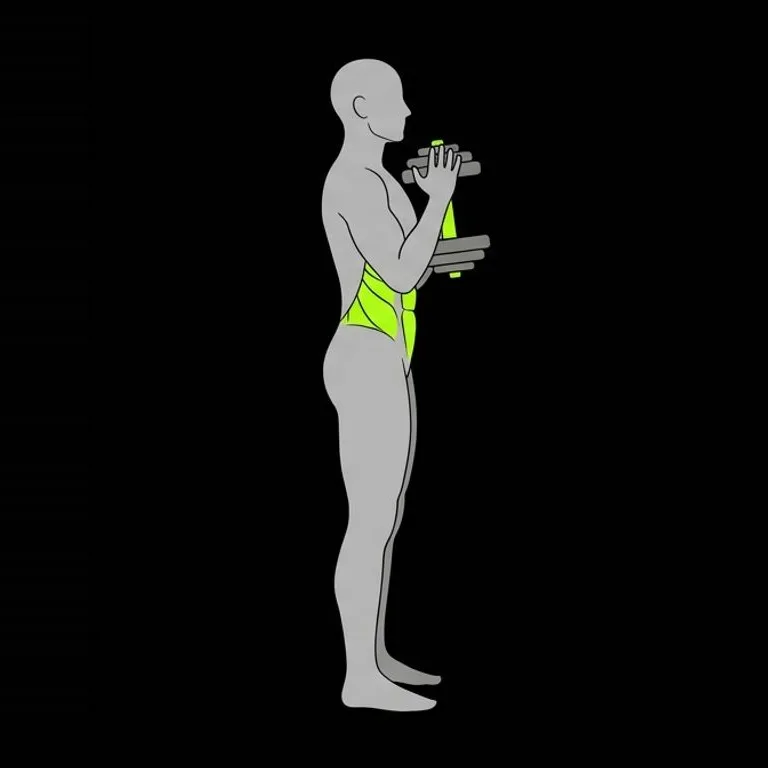
1 Set stance and brace hard
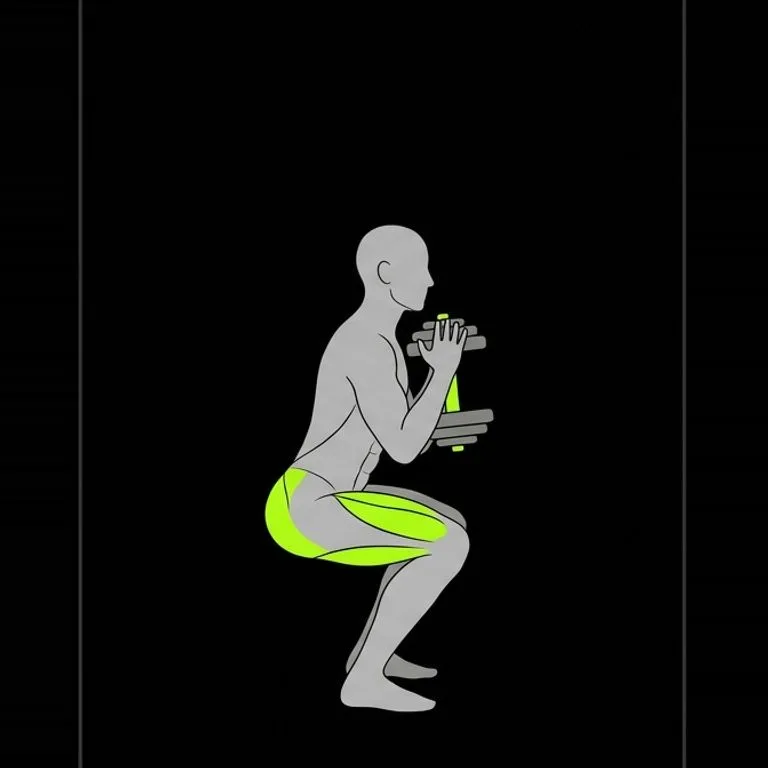
2 Descend to depth under control
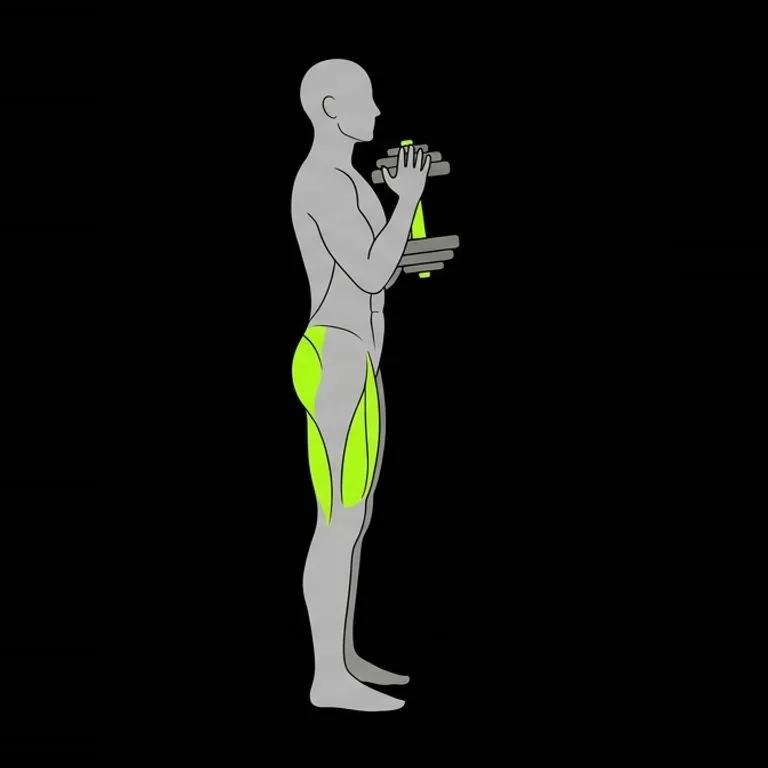
3 Drive up through mid-foot
- Squat pattern: the goblet squat is the friendliest start, programmed at 10–15 reps a set, before the barbell squat.
- Hinge: the Romanian deadlift teaches the hips to do the work.
- Push: push-ups and the dumbbell bench press build the chest and shoulders that change how a shirt fits.
- Pull: the lat pulldown and a row widen the back, which is most of what makes a waist look smaller.
- Arms and shoulders, later: a few sets of curls and lateral raises once the big lifts are in place.
Progress by double progression: stay at a weight until every set reaches the top of the rep range, then add the smallest step, 2.5 kg (5 lb) on a barbell, and start again from the bottom. Aim for roughly 10–20 hard sets a week for each major muscle group over time, building up rather than starting there. The app does that bookkeeping for you and tells you when to add weight.
Questions
Example bodies are invented; every figure is an estimate for healthy adults, not medical advice. How every number is made, with its citations: Sources & method.