How do you do a barbell back squat with good form?
Rep range, rest and load step from the Month6 exercise catalog; last updated .
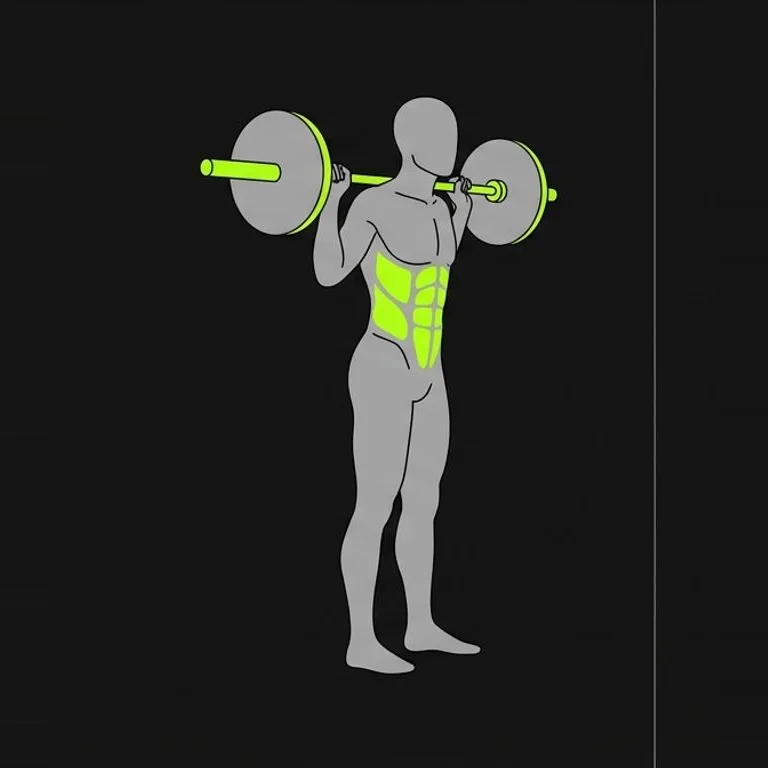
1 Set stance and brace hard
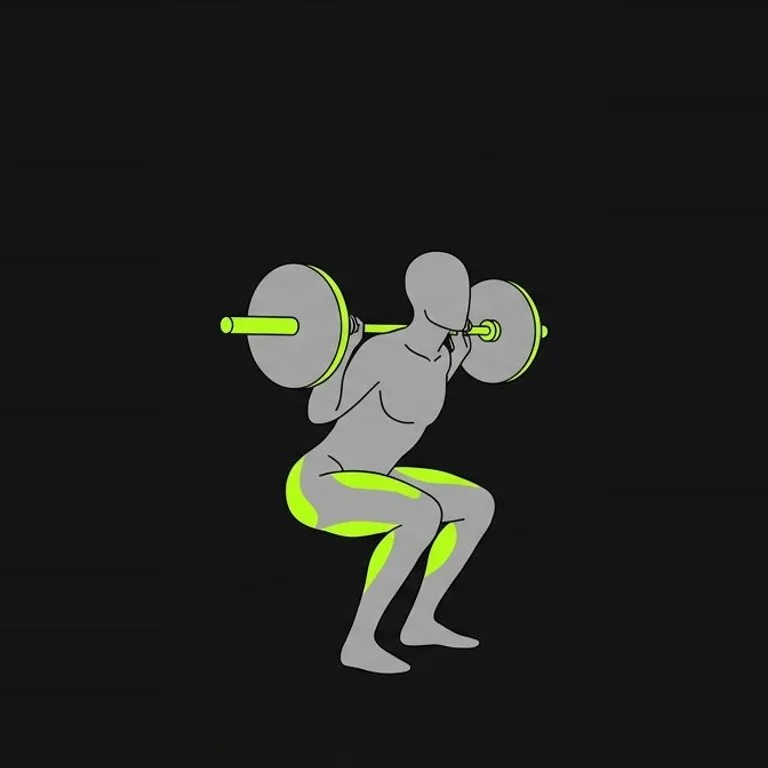
2 Descend to depth under control
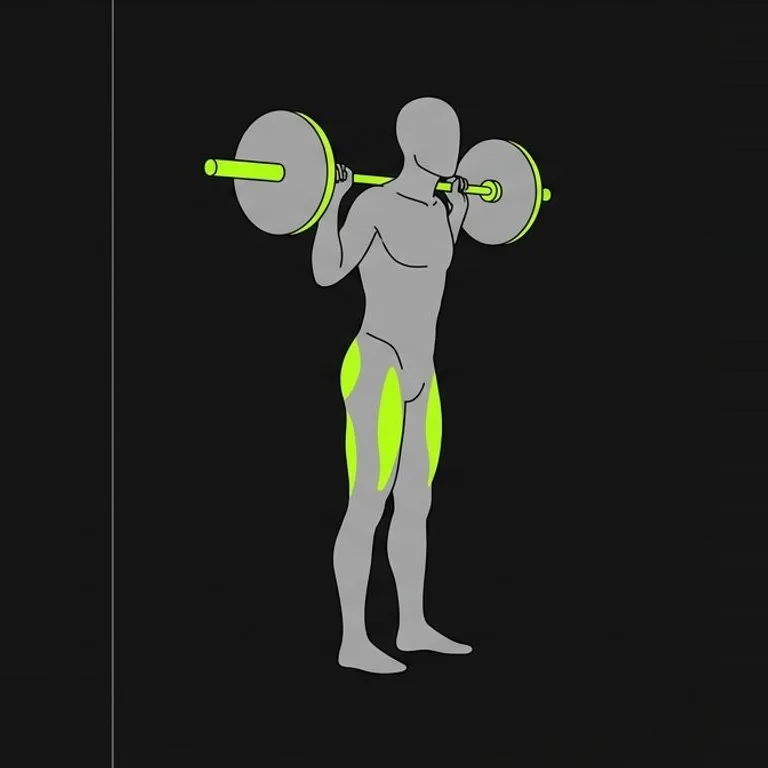
3 Drive up through mid-foot
Back squat at a glance
| Back squat | |
|---|---|
| Primary muscles | quadriceps (front of the thighs), glutes |
| Also works | adductors (inner thighs), hamstrings, lower back and trunk muscles |
| Equipment | Gym (barbell, cable or machine) |
| Rep range | 6–10 reps |
| Rest between sets | 2.5 minutes |
| Load step | 2.5 kg (5 lb) |
The back squat is the lift where a loaded barbell sits on your upper back and you bend your knees and hips to lower yourself, then stand back up. Almost every lower-body plan is built around it, because no other movement lets you load the thighs and hips this heavily while also asking your trunk to hold everything together.
People train it for strong, full legs and for the plain usefulness of being able to stand up from a deep position under load. The barbell makes progress easy to see: you can start with the empty bar, add a small plate when the reps come cleanly, and keep doing that for a long stretch of training. It is a technical lift, so the first weeks are about owning the pattern; the weight follows.
Your squat will look a little different from anyone else's. Leg length, torso length and how your hips are built all change how far you lean forward and how wide your feet want to be. The goal is not a copy of a picture but a repeatable squat where the bar stays over the middle of your foot from the top to the bottom and back.
How to set up
- Set the rack hooks at about the height of your armpits or the middle of your chest. You should be able to unrack with a short knee bend, not a tiptoe reach and not a half squat.
- Set the safety arms just below the lowest point your hips reach. If a rep goes wrong, you sit down onto them and walk away; check the height with the empty bar first.
- Step under the bar and place it on the meaty shelf across the top of your shoulder blades, below the bony bump at the base of your neck. Grip the bar evenly, hands as close as your shoulders allow, and pull your elbows down so your upper back tightens under it.
- Stand up to lift the bar off the hooks, then take a few small steps back. Fewer steps is better: you only need enough room to clear the hooks on the way down.
- Set your feet around shoulder width, toes turned out a little. Most lifters land somewhere between straight ahead and a modest flare; pick the stance that lets you sit deep with your heels flat.
How to do the back squat
- Take a big breath into your belly and sides, and tighten your trunk as if someone were about to poke your stomach. Hold that brace through the descent.
- Start the squat by bending at the hips and knees together. Your knees travel forward and out over your toes while your hips sit down between your heels, not far behind you.
- Lower under control until the crease of your hip is level with or a little below the top of your knee, or as deep as you can go with your back still in the same position and your heels down.
- Drive up by pushing the whole foot into the floor. Lead with your upper back so your chest and hips rise at the same speed; if your hips shoot up first, the lift turns into a forward-leaning good morning.
- Finish standing tall with your knees and hips straight, breathe out, take a new breath and brace again before the next rep. After the last rep, walk forward until the bar touches the uprights, then lower it into the hooks.
Cues that help
- Spread the floor with your feet. Pushing your feet apart without moving them keeps your knees tracking over your toes and switches on the hips from the first inch.
- Sit between your heels. Thinking down rather than back keeps the bar over the middle of the foot, so you stay balanced instead of tipping onto your toes or heels.
- Elbows down, upper back tight. Pulling the bar into your back makes a solid shelf, which stops the bar rolling toward your neck and stops your chest collapsing out of the hole.
- Big breath, then move. Bracing before the descent gives your spine a firm column to hold the bar; a breath taken halfway down is a brace you never had.
- Chest and hips up together. Rising as one piece keeps the load on the legs; letting the hips race ahead hands the work to your lower back.
Common mistakes
- Knees caving inward on the way up. Lighten the bar and think about pushing your knees out over your little toes. Pausing briefly at the bottom helps you learn the position.
- Heels lifting off the floor. Keep your weight across the whole foot, try a slightly wider stance, or put small plates under your heels while your ankles loosen up. If depth is the issue, squat to the depth you own for now.
- Chasing depth with a rounding lower back at the bottom. Stop the descent just above the point where your pelvis tucks under. Use a goblet squat to practise sitting deeper with a straight back.
- Cutting reps high. Film a set from the side or use a low box as a depth target. A lighter bar moved through a full range builds more than a heavy bar moved a few inches.
- Losing the brace between reps. Stand all the way up, reset your breath and tighten again before every rep. Rushing the next rep is how the middle of a set falls apart.
Who it suits
The back squat suits anyone with access to a squat rack who wants a heavy, progressive lift for the legs. It is a good main lift for a leg day once you can squat the empty bar to depth with your heels down and your back holding its shape.
If you train without a rack or safety arms, if a barbell on your back bothers your shoulders, or if you are still learning to sit deep, pick one of the swaps below. A goblet squat teaches the pattern, and a leg press loads the thighs without the balance demand. If a squat hurts, stop the set and choose a swap rather than pushing through it.
How Month6 progresses it
Month6 starts the back squat at the bottom of its range, 6 reps, and adds reps session by session until every set reaches 10.
When every set of the back squat reaches the top of the range, the load goes up by the smallest sensible step for it — 2.5 kg (5 lb) — and the reps start again from 6.
Rest on the back squat is 2.5 minutes: a heavy compound lift recovers better with longer breaks.
The squat is one of the lifts you can progress for longest, because the legs are large muscles and the bar moves through a long range. Early on the weight rises quickly; later, small jumps and patience do the work.
Month6 logs each set and, once you reach the top of the rep range with clean reps, adds the next load step and drops you back to the bottom of the range. If reps start getting shallow to make the number, the load has outrun you: hold it and own the depth first.
A stall of a few sessions usually comes down to recovery. Sleep, enough food and a lighter week tend to bring the bar moving again sooner than forcing the same heavy sets.
Swaps
- Front squat Take the front squat when you want a more upright torso and more thigh work, or when the back squat keeps tipping you forward. The bar sits on the front of your shoulders, so the load is usually lighter.
- Goblet squat Take the goblet squat when you are learning the pattern, when there is no rack free, or when you want depth practice. Holding a dumbbell at your chest makes sitting upright feel natural.
- Leg press Take the leg press when you want to work the thighs hard without balancing a bar or bracing under load, for example after a hard week or late in a session.
- Dumbbell split squat Take the split squat when you only have dumbbells, or when you want each leg working on its own. It also shows up a stronger and a weaker side quickly.
- Bodyweight squat Take the bodyweight squat when you have no equipment, or as a warm-up to groove the pattern. Slow the lowering or pause at the bottom to make it harder.
Questions
Related exercises
More legs exercises: Legs · the whole library
Technique guidance for healthy adults, not medical advice; stop if a movement hurts. How every number is made, with its citations: Sources & method.
Log it, and let the plan move with you
Month6 logs every set of the back squat in one tap, offers the swap when the station is taken, and adds load when you reach the top of the range.