How do you do a Romanian deadlift properly?
Rep range, rest and load step from the Month6 exercise catalog; last updated .
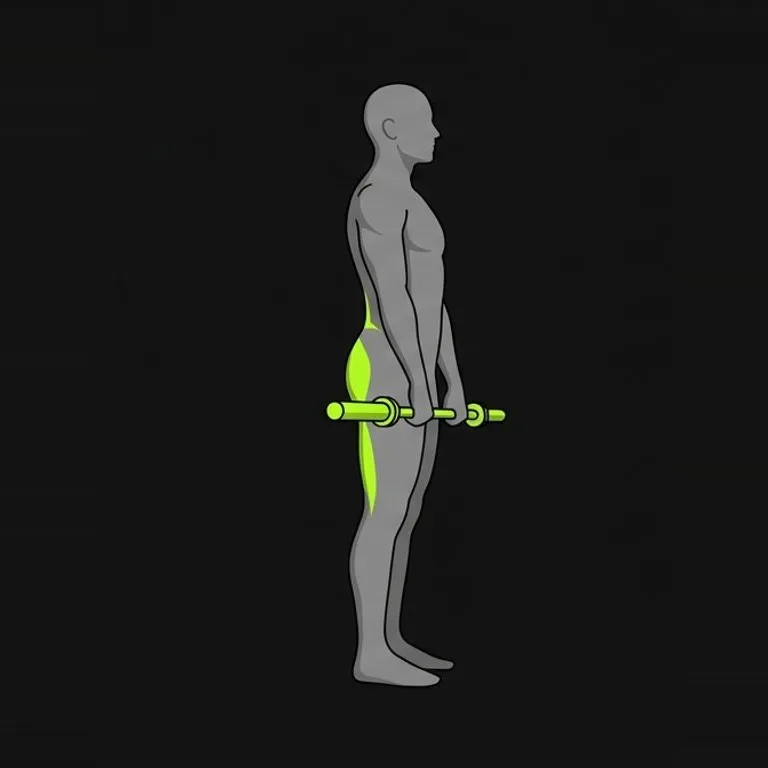
1 Set stance and brace hard
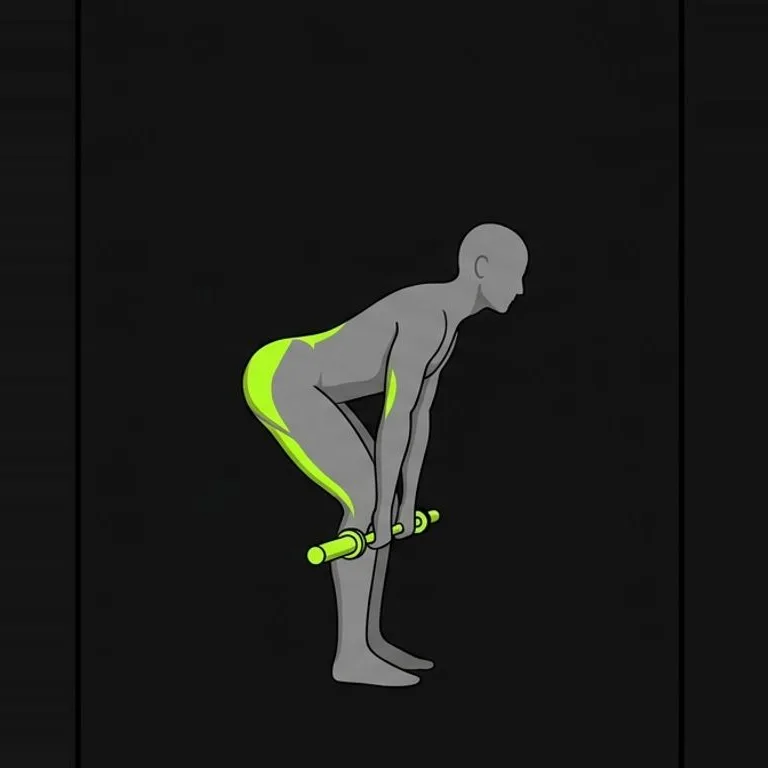
2 Descend to depth under control
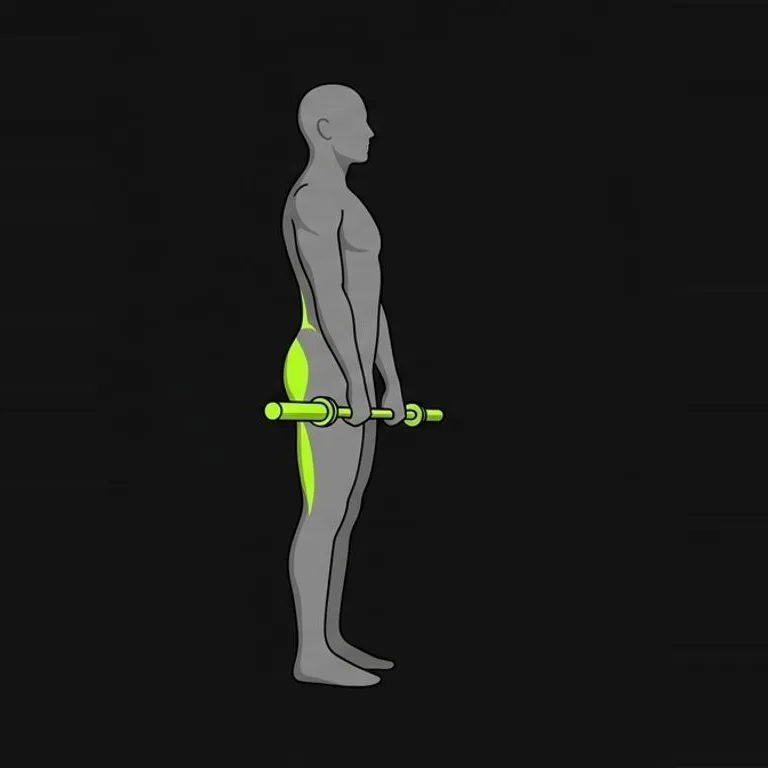
3 Drive up through mid-foot
Romanian deadlift at a glance
| Romanian deadlift | |
|---|---|
| Primary muscles | hamstrings (back of the thighs), glutes |
| Also works | lower back (spinal erectors), upper back and grip, adductors |
| Equipment | Gym (barbell, cable or machine) |
| Rep range | 8–12 reps |
| Rest between sets | 2.5 minutes |
| Load step | 2.5 kg (5 lb) |
The Romanian deadlift, often shortened to RDL, is a hip hinge that starts from standing rather than from the floor. You hold a barbell at arm's length, keep a slight bend in the knee, and fold forward at the hips until your hamstrings are fully stretched, then return to standing. The plates usually never touch the ground.
It is one of the most direct ways to load the hamstrings through a long stretch, which is where they seem to respond well to training. It also builds the glutes and teaches the hinge pattern that carries over to pulling from the floor, to picking things up in daily life and to holding a flat back under load.
Because the movement starts at the top, you control the lowering on every rep. That makes it easy to feel which muscles are working, and it makes a sloppy rep easy to spot: if your back starts to round or the bar drifts away from your legs, you will know before the weight does any harm to the set.
How to set up
- Set the bar in a rack at about the height of the middle of your thigh, or deadlift it up from the floor for the first rep. Taking it from a rack saves your energy for the hinge itself.
- Stand with your feet about hip width apart and pointing forward or turned out only slightly. A narrower stance than a squat keeps the bar close and the hips free to travel back.
- Hold the bar with a double overhand grip just outside your thighs. If your grip gives out before your hamstrings do, use lifting straps or a mixed grip for the heaviest sets.
- Stand tall with your shoulders pulled slightly back and your ribs stacked over your hips. Soften your knees just enough that they are not locked; that small bend stays the same from the top to the bottom of every rep.
- Take a breath, brace your trunk, and squeeze the bar as if you were trying to keep it pinned against your thighs. That is your starting position.
How to do the romanian deadlift
- Push your hips straight back, as if you were shutting a car door behind you with your backside. Your chest tips forward as a result of the hips moving back, not because you are bending your spine.
- Let the bar slide down the front of your thighs, staying in contact or within a finger's width of your legs the whole time. Your shins stay roughly vertical.
- Keep going until you feel a strong stretch through the back of your thighs or until your back is about to lose its flat shape, whichever comes first. For many lifters that is somewhere around the knee or just below it.
- Pause for a moment at the bottom without bouncing, then drive your hips forward to stand up. Squeeze your glutes at the top, but stop at upright rather than leaning back.
- Reset your breath at the top before you start the next rep. After the final rep, return the bar to the rack or set it down by bending your knees with a flat back.
Cues that help
- Hips back, not chest down. Moving the hips first keeps the load on the hamstrings; reaching the chest toward the floor turns the lift into a lower-back bend.
- Shave your legs with the bar. A bar that stays close keeps the weight over your feet, so the hips and hamstrings carry it instead of your back.
- Knees soft, then frozen. Keeping the same small knee bend all the way down stops the movement from sliding into a squat and keeps the stretch in the hamstrings.
- Proud chest, long neck. A slight lift of the chest and a neutral head make it easier to hold a flat back as you fold forward.
- Push the floor away with your heels. Keeping your weight toward the back half of the foot loads the backs of the legs and keeps you from tipping onto your toes.
Common mistakes
- Rounding the lower back to reach further down. Stop where your back starts to change shape. Range of motion comes from the hips moving back, not from the spine bending.
- Bending the knees more and more as you lower. Lock in the small bend at the start and keep it. If the bar reaches mid-shin with deeply bent knees, you have turned it into a conventional deadlift.
- Letting the bar drift forward, away from the legs. Pull your shoulders back slightly and think of keeping the bar glued to your thighs. Engaging your lats helps hold it in.
- Over-extending at the top. Finish standing straight with the glutes squeezed. Leaning back past upright adds nothing to the lift and loads the lower back for no gain.
- Moving too fast through the lowering. Take a slow count on the way down. The stretch is the part that builds the hamstrings, so give it time.
Who it suits
The Romanian deadlift suits anyone who wants stronger, bigger hamstrings and glutes, and anyone learning to hinge before pulling heavy from the floor. It pairs well with a squat or leg press on the same day, since it hits the back of the legs that those lifts leave lighter.
If your grip limits you, use straps. If a barbell feels awkward, or if you do not have one, pick one of the swaps below. If a hinge causes pain rather than a strong stretch, stop and choose a different movement such as a leg curl.
How Month6 progresses it
Month6 starts the romanian deadlift at the bottom of its range, 8 reps, and adds reps session by session until every set reaches 12.
When every set of the romanian deadlift reaches the top of the range, the load goes up by the smallest sensible step for it — 2.5 kg (5 lb) — and the reps start again from 8.
Rest on the romanian deadlift is 2.5 minutes: a heavy compound lift recovers better with longer breaks.
Load rises steadily on this lift, but the stretch is the point, not the number. Add weight only when every rep reaches the same depth with a flat back and a controlled lowering.
Month6 records your sets and, once you have hit the top of the rep range cleanly, moves you to the next load step and back to the bottom of the range. Grip often fails before the hamstrings do as the load climbs; straps keep the set about the legs.
Expect real soreness in the hamstrings in the first weeks, especially if you have not trained them through a long stretch before. It eases as you keep training them regularly.
Swaps
- Dumbbell Romanian deadlift Take the dumbbell version when the barbell is busy, when you train at home, or when you want each hand free to find its own path. The dumbbells can travel slightly to the sides of your legs.
- Deadlift Take the conventional deadlift when you want to pull heavier from the floor and train the whole back of the body at once. It uses more knee bend and starts each rep from a dead stop.
- Leg curl Take the leg curl when you want to train the hamstrings without loading your back at all, or when a hinge does not feel right that day. It works them by bending the knee instead of the hip.
- Glute bridge Take the glute bridge when you want the hips to work with no equipment, or as a lighter option on a tired day. It shifts the emphasis toward the glutes.
Questions
Related exercises
More legs exercises: Legs · the whole library
Technique guidance for healthy adults, not medical advice; stop if a movement hurts. How every number is made, with its citations: Sources & method.
Log it, and let the plan move with you
Month6 logs every set of the romanian deadlift in one tap, offers the swap when the station is taken, and adds load when you reach the top of the range.