How do you do a barbell row with good form?
Rep range, rest and load step from the Month6 exercise catalog; last updated .
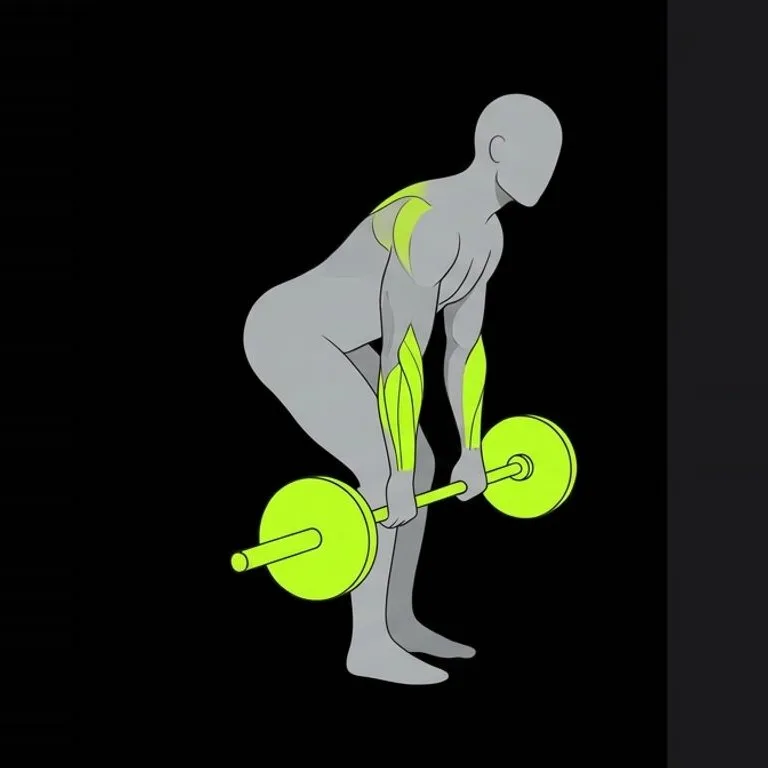
1 Set the grip, brace the core
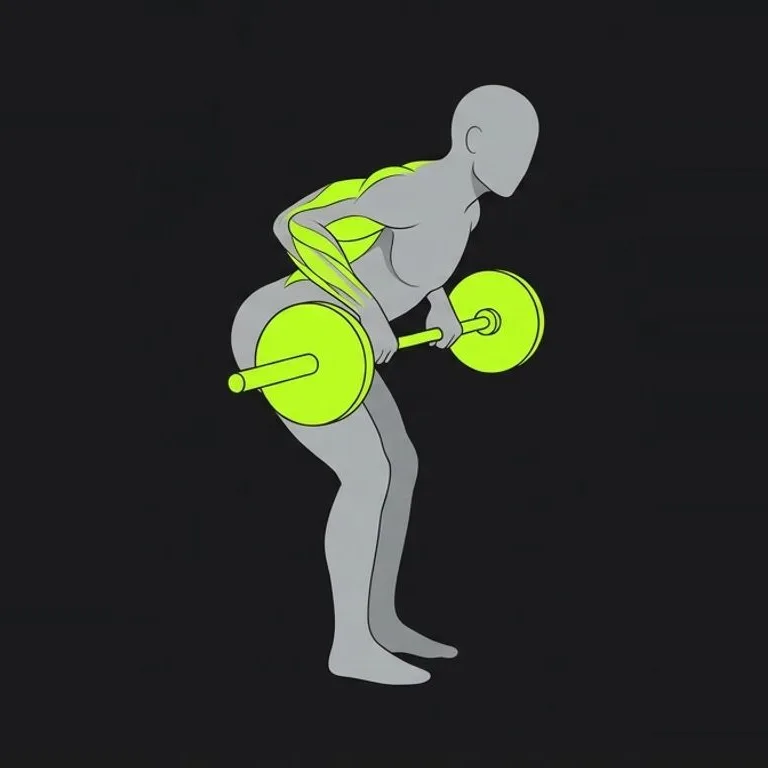
2 Pull with the elbows to full contraction
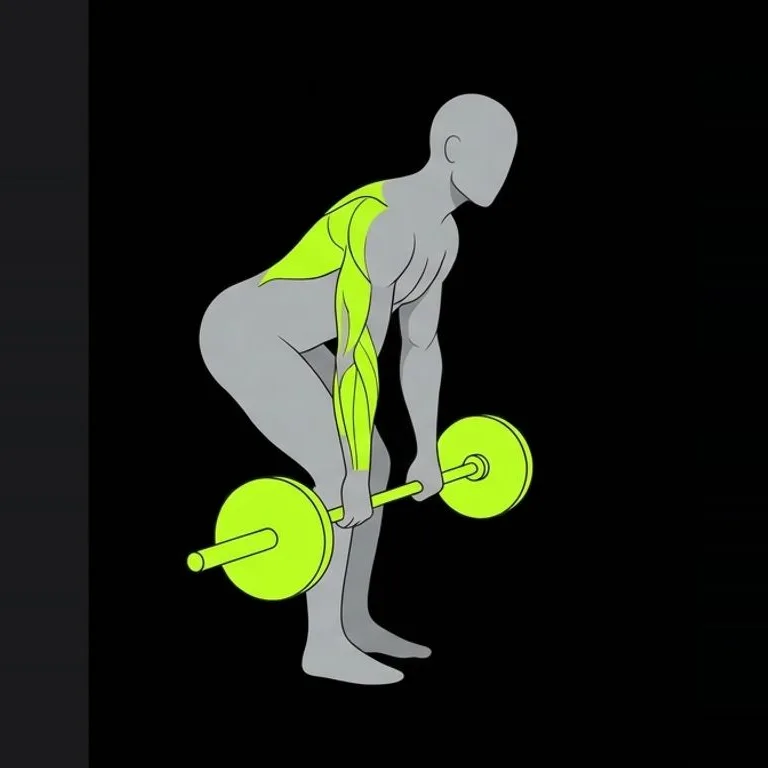
3 Control the stretch back
Barbell row at a glance
| Barbell row | |
|---|---|
| Primary muscles | lats, upper back (rhomboids and middle traps) |
| Also works | rear shoulders, biceps and forearms, spinal erectors, hamstrings and glutes holding the hinge |
| Equipment | Gym (barbell, cable or machine) |
| Rep range | 8–12 reps |
| Rest between sets | 2.5 minutes |
| Load step | 2.5 kg (5 lb) |
The barbell row, often called the bent-over row, is the heavy horizontal pull of a barbell programme. You stand, hinge forward until your chest faces the floor at an angle, and row the bar from straight arms up into your stomach. Where a press pushes weight away from the chest, the row brings it back in, so it is the natural partner to the bench press on an upper-body day.
It builds thickness through the middle of the back: the lats, the muscles between the shoulder blades and the rear of the shoulders all work hard on every rep. It also asks your hips, hamstrings and lower back to hold a hinged position while your arms move, which carries straight over to the deadlift. Because the load is a barbell, you can add small amounts of weight for a long time and see the progress in your log.
How to set up
- Load the bar on the floor or take it from a rack set around mid-thigh. Stand with your feet about hip width apart and the bar over the middle of your feet, close to your shins.
- Take an overhand grip a little wider than shoulder width. Your hands should sit just outside your thighs so the bar can travel past your legs into your stomach without hitting them.
- Push your hips back and let your chest come forward until your torso is somewhere between a steep incline and almost flat. Unlock your knees so your hamstrings take the stretch rather than your lower back.
- Set your back flat from your hips to the base of your skull and brace your trunk. The bar should hang straight down from your shoulders, roughly over your midfoot.
- Pull your shoulders slightly away from your ears before the first rep. Starting with them shrugged up makes the traps do the work you want from the lats and mid-back.
How to do the barbell row
- Drive your elbows back and up towards the ceiling, keeping them at a moderate angle from your body. The bar travels up your thighs and lands around your lower ribs or upper stomach.
- At the top, squeeze your shoulder blades together for a beat. You should be able to hold the bar there briefly; if you cannot, the weight is moving you instead of the other way round.
- Lower the bar along the same path until your arms are straight and your shoulder blades spread apart. Let the upper back stretch at the bottom without letting your torso drop.
- Keep the angle of your torso fixed throughout the set. Your hips, knees and back stay where you put them; only your arms and shoulder blades move.
- Breathe at the bottom between reps and re-brace before the next pull. When the set is done, bend your knees and set the bar down, or stand up and rack it, rather than letting it fall from a hinged position.
Cues that help
- Elbows to your back pockets. Pulling with the elbows rather than the hands takes the biceps out of the lead role and lets the lats and upper back move the bar.
- Chest stays where it is. A still torso means the back muscles do the rowing; a chest that bobs up and down turns the row into a partial deadlift.
- Touch the same spot every rep. Landing the bar in one place, around the lower ribs, keeps the bar path consistent and shows you when fatigue starts shortening the pull.
- Long neck, eyes on the floor ahead. Keeping the head in line with the spine stops you craning up to the mirror, which pulls the upper back out of position.
- Squeeze, then lower slowly. A short squeeze and a controlled lowering make the muscles do the work in both directions instead of letting gravity take the bar down.
Common mistakes
- Standing more and more upright as the set goes on. Pick a torso angle and hold it. If you have to rise to finish the reps, reduce the load until the last rep looks like the first.
- Heaving the bar up with the hips. Lock the hips and knees in place and pull only with the arms and back. A small amount of body movement on the final rep is fine; on every rep it means the bar is too heavy.
- Rowing to the chest with elbows flared wide. Bring the bar lower, towards your stomach, and let the elbows sit at an angle to your body. That line suits the lats far better.
- Rounding the lower back under the bar. Push your hips back further, unlock your knees and brace before each rep. If the back still rounds, row a lighter bar or switch to a supported swap.
- Shrugging at the top. Think about drawing the shoulder blades back and down rather than up. The shoulders stay away from your ears the whole set.
Who it suits
The barbell row suits lifters who already hinge comfortably, for example from deadlifts or Romanian deadlifts, and who want a heavy pull to balance their pressing. It pairs well with the bench press because the two train opposite sides of the upper body with similar loads.
If holding the hinge for a full set tires your lower back before your upper back, or if any part of the movement hurts, stop and choose a supported swap. A chest-supported or seated row lets the back muscles work without your hips and spine holding the position.
How Month6 progresses it
Month6 starts the barbell row at the bottom of its range, 8 reps, and adds reps session by session until every set reaches 12.
When every set of the barbell row reaches the top of the range, the load goes up by the smallest sensible step for it — 2.5 kg (5 lb) — and the reps start again from 8.
Rest on the barbell row is 2.5 minutes: a heavy compound lift recovers better with longer breaks.
Rows progress steadily but more slowly than deadlifts. Add weight only when every rep still lands in the same spot with the same torso angle; a heavier row done by standing up is not really a heavier row.
If you stall, slow the lowering and add a brief pause at the top for a few sessions. That makes the same weight feel heavier and usually lets the next jump stick. Keep an eye on grip too: if your hands give out first, that is the limit to work on.
Swaps
- One-arm dumbbell row Pick the dumbbell row when you want to rest your lower back, since one hand braces on a bench. Each side works alone, so it also shows whether one side of your back is doing more than the other.
- T-bar row Use the T-bar row when your gym has the station and you want a heavy row with a neutral grip and a fixed path. The bar is anchored at one end, which makes the hinge easier to hold.
- Seated cable row Switch to the seated cable row when your hips or lower back need a break from the hinge. Sitting with your feet braced lets you pull hard and control the stretch at the front of every rep.
- Inverted row Choose the inverted row when there is no barbell free or you train with only a rack and a bar. Your body is the load: walk your feet forward to make it harder, or raise the bar to make it easier.
Questions
Related exercises
More back exercises: Back · the whole library
Technique guidance for healthy adults, not medical advice; stop if a movement hurts. How every number is made, with its citations: Sources & method.
Log it, and let the plan move with you
Month6 logs every set of the barbell row in one tap, offers the swap when the station is taken, and adds load when you reach the top of the range.