How do you do a pull-up with good form?
Rep range, rest and load step from the Month6 exercise catalog; last updated .
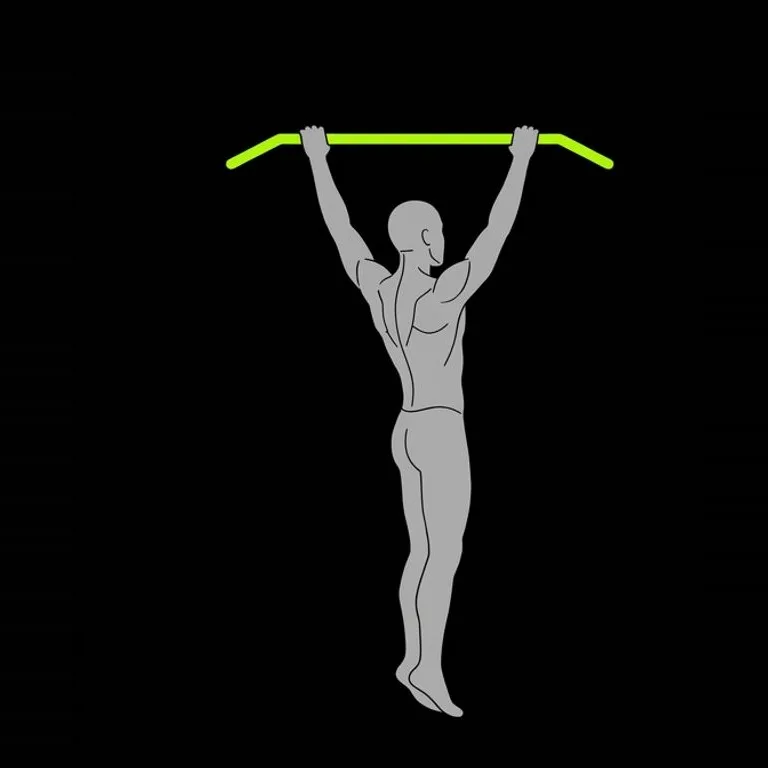
1 Dead hang, shoulders set
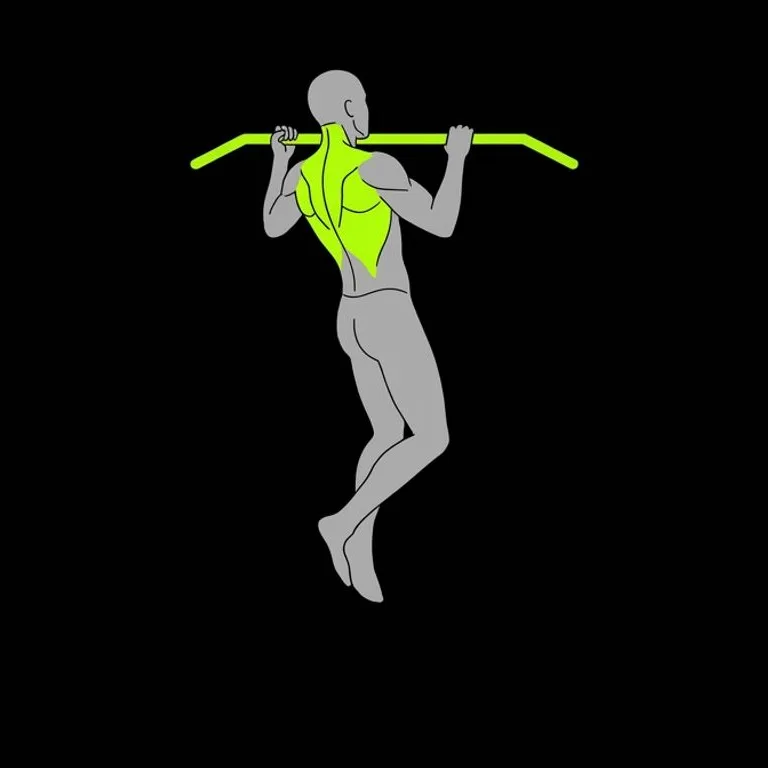
2 Pull chest to the bar
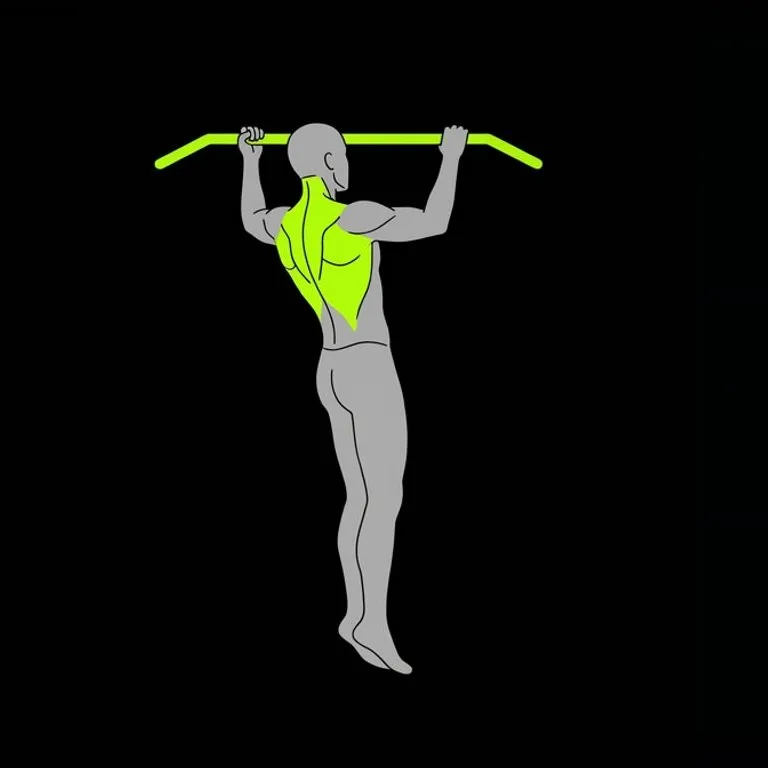
3 Lower under full control
Pull-up at a glance
| Pull-up | |
|---|---|
| Primary muscles | lats |
| Also works | upper back and lower traps, biceps and the muscles of the forearm, rear shoulders, abs holding the body still |
| Equipment | Bodyweight |
| Rep range | 4–12 reps |
| Rest between sets | 90 seconds |
| Load step | Bodyweight |
The pull-up is the classic test of upper-body pulling strength: you hang from a bar with your palms facing away and lift your whole body until your chin passes over it. There is nothing to load and nothing to adjust, only you and gravity. That simplicity is a large part of its appeal. A single bar in a doorway, a park or the corner of a gym is enough to train it for years.
It builds wide, strong lats and a sturdy upper back, and it teaches you to move your own body through space rather than a handle on a cable. Because the load is your body weight, it rewards both getting stronger and staying lean. For many people the first clean rep is a real milestone, and every rep after that is easy to count and easy to compare from week to week.
How to set up
- Stand under the bar and take an overhand grip with your hands a little wider than your shoulders. Wrap your thumbs around the bar so it sits deep in your hands rather than hanging off your fingertips.
- Step or jump up into a full hang with straight arms. If your feet touch the floor, bend your knees and cross your ankles behind you so your legs stay out of the way.
- Before you pull, draw your shoulders down from your ears so your neck looks long. This small move, sometimes called setting the shoulders, starts the lats working before your arms bend.
- Squeeze your glutes and point your legs slightly forward so your body forms a gentle hollow rather than an arch. A tight body swings less and is easier to lift.
- Fix your eyes on the bar or just above it. Looking straight ahead keeps your neck neutral instead of craning up to get the chin over.
How to do the pull-up
- Pull your elbows down and back as if you were trying to tuck them into your back pockets. Your body rises as the elbows drop, and the bar travels towards your upper chest.
- Keep pulling until your chin clears the bar. Aim to bring your chest towards it rather than poking your chin up to reach it.
- Pause for a moment at the top with your shoulders still pulled down. If you cannot hold the top, the rep was not quite finished.
- Lower yourself slowly until your arms are fully straight and your shoulders rise towards your ears again. The lowering half builds as much strength as the pull, so do not drop.
- Reset your shoulders in the hang, keep your body still and pull again. Stop the set when you cannot get your chin over with clean form, not after a string of half reps.
Cues that help
- Pull the bar down to you. Thinking of dragging the bar towards your chest, rather than lifting yourself up, makes the lats lead the movement instead of the arms.
- Chest to the bar. Aiming the chest at the bar keeps your upper back working and stops you craning your neck to sneak the chin over.
- Shoulders away from your ears. Keeping them down at the top and through the pull keeps the load on the back muscles rather than shrugging it into the neck.
- Hollow body, no swing. A still, slightly curled body gives momentum nowhere to come from, so every rep counts the same as the last.
- Straight arms at the bottom. A full hang between reps means you train the whole range and your rep count means the same thing every week.
Common mistakes
- Half reps that stop short of straight arms. Lower all the way to a full hang before the next rep. Fewer complete reps are worth more than many partial ones.
- Kicking or swinging the legs to get over the bar. Squeeze your glutes, keep your legs together and slightly in front of you, and stop the set when you can no longer rise without kicking.
- Reaching for the bar with the chin. Keep your eyes level and pull your chest up instead. The chin clears the bar because your body rose, not because your neck stretched.
- Shrugging the shoulders up at the top. Draw them down before the first rep and hold that position as you pull. If you lose it, the set is near its end.
- Dropping fast from the top. Take a slow count down to the hang. Controlling the descent builds strength for the next rep and keeps the elbows and shoulders comfortable.
Who it suits
The pull-up suits anyone who can already do a few clean reps, or who is working towards the first one with lowering practice. It is ideal when you train at home or outdoors, because a bar is all it needs.
If you cannot yet do a single rep, or if hanging bothers your shoulders or elbows, start with a swap below. A lat pulldown lets you pick a load lighter than your body, and an inverted row trains the same muscles with your feet on the floor. If anything hurts, stop and use one of those instead.
How Month6 progresses it
Month6 starts the pull-up at the bottom of its range, 4 reps, and adds reps session by session until every set reaches 12.
The pull-up has no plate to add, so progress on it is more reps at the same body weight, then a harder variation from the swaps below.
Rest on the pull-up is 90 seconds: long enough to repeat the effort, short enough to keep the session moving.
With no plate to add, the pull-up moves forward one rep at a time. Some sessions you will gain a rep on the first set and none on the others, and that still counts. Small gains spread across all your sets add up over a few weeks.
If you are stuck below the bottom of the range, practise slow lowerings: jump or step to the top, then take as long as you can to reach a full hang. Mix those with a few lat pulldowns and the first full rep usually arrives sooner than expected. Losing a little body fat also makes every rep lighter.
Swaps
- Chin-up Go for the chin-up when the pull-up is not quite there yet. Turning your palms towards you brings the biceps in and puts your arms in a stronger line, so most people manage a few more reps.
- Lat pulldown Use the lat pulldown when you cannot yet lift your full body weight, or when you want extra back work after your pull-ups are done. The stack lets you choose a load and finish the set with good form.
- Inverted row Choose the inverted row when there is no high bar, or when you need an easier pull with your heels on the floor. The more upright your body, the lighter it gets, which makes it a good stepping stone.
Questions
Related exercises
More back exercises: Back · the whole library
Technique guidance for healthy adults, not medical advice; stop if a movement hurts. How every number is made, with its citations: Sources & method.
Log it, and let the plan move with you
Month6 logs every set of the pull-up in one tap, offers the swap when the station is taken, and adds load when you reach the top of the range.