How do you bench press with good form?
Rep range, rest and load step from the Month6 exercise catalog; last updated .
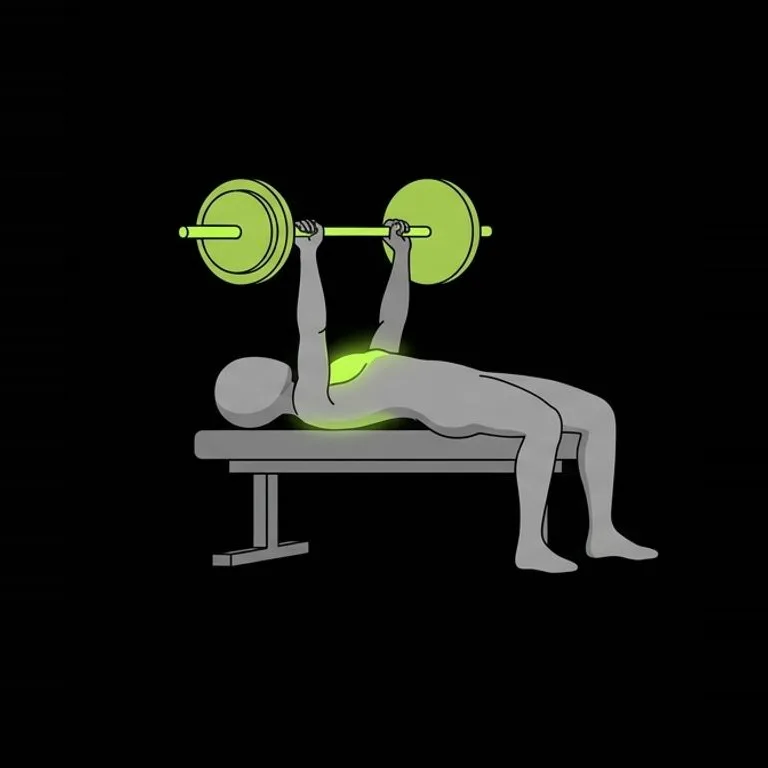
1 Set up braced, blades retracted
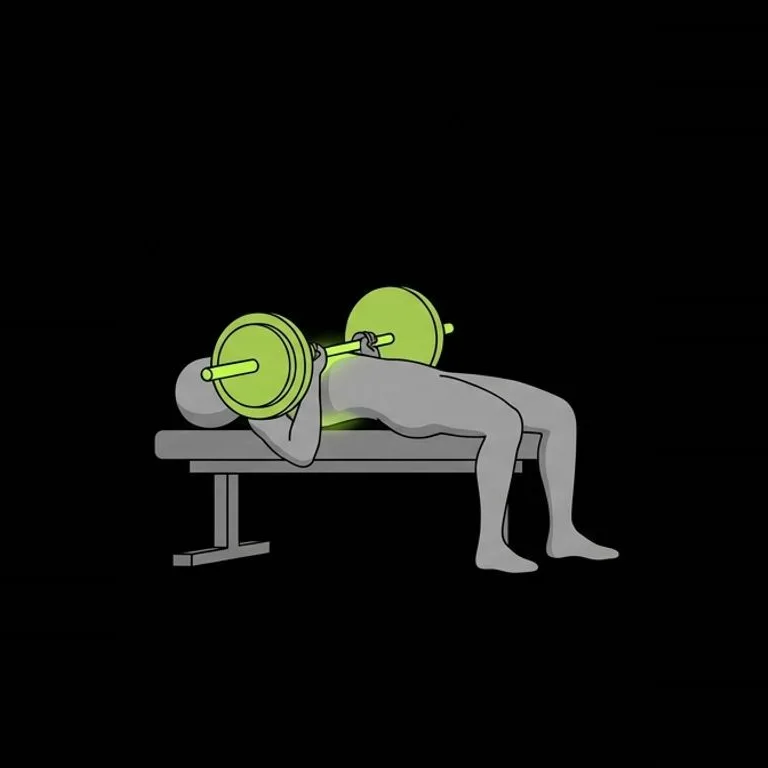
2 Lower to the target under control
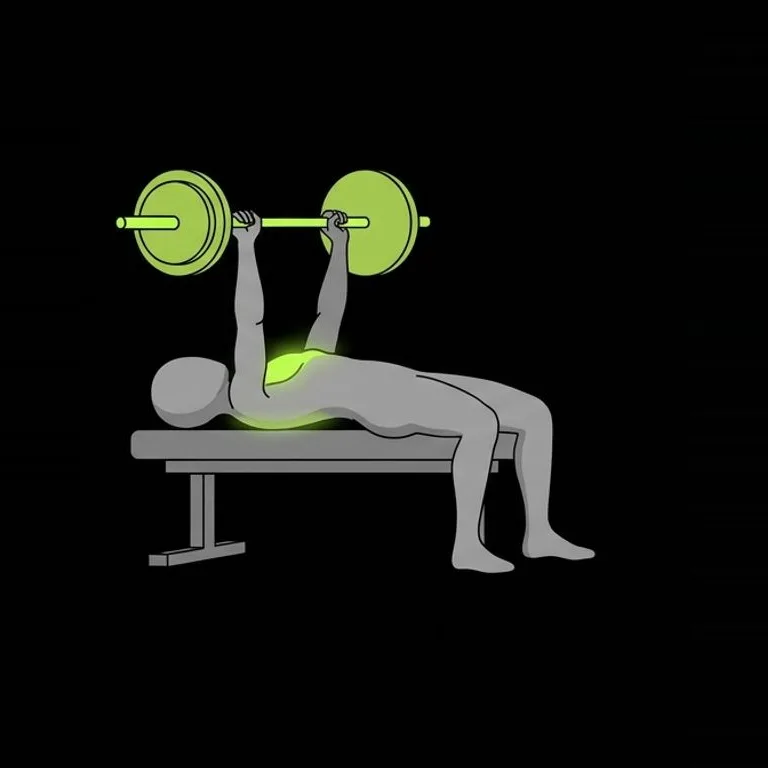
3 Press up and squeeze
Bench press at a glance
| Bench press | |
|---|---|
| Primary muscles | chest (pectoralis major) |
| Also works | front of the shoulders, triceps |
| Equipment | Gym (barbell, cable or machine) |
| Rep range | 6–10 reps |
| Rest between sets | 2.5 minutes |
| Load step | 2.5 kg (5 lb) |
The bench press is the barbell lift most people picture when they think of a gym. You lie on a flat bench, take the bar out of the rack, lower it to your chest and press it back to straight arms. It is the heaviest pressing movement most lifters will ever do, which is exactly why it rewards a careful setup: the load is high enough that small errors in where the bar travels show up as stalled progress or cranky shoulders.
It earns its place in a plan because it trains the chest, the front of the shoulders and the triceps together, and because the barbell lets you add load in small, repeatable steps for a long time. A beginner can press the empty bar on day one and still be adding weight months later. That steady, measurable progress is what makes it a good anchor lift for an upper-body day.
How to set up
- Lie on the bench with your eyes directly under the bar. Too far toward the rack and you will clip the hooks on every rep; too far down the bench and the unrack becomes a long, unstable reach.
- Grip the bar a little wider than shoulder width, so your forearms are close to vertical when the bar touches your chest. Wrap your thumbs around the bar and let it sit low in your palm, over the heel of the hand, rather than up near your fingers.
- Squeeze your shoulder blades together and pull them down toward your back pockets, as if you were tucking them into the bench. This builds a stable shelf for the press and keeps the front of the shoulder out of a vulnerable position.
- Plant your feet flat, a little wider than your hips, and push them into the floor. A slight arch in your upper back is normal and helpful; your glutes stay on the bench.
- Unrack the bar with straight arms and bring it out until it sits directly over your shoulders. Take a breath and brace before the first rep, not during it.
How to do the bench press
- Lower the bar under control toward your lower chest, roughly in line with the bottom of your breastbone. Your elbows travel down and slightly in, sitting at an angle between your torso and a full flare rather than straight out to the sides.
- Touch the chest lightly. Do not bounce the bar off your ribs; a soft touch keeps the rep honest and keeps the tension in the muscle instead of in a rebound.
- Press up and slightly back, so the bar finishes over your shoulders where it started. The path is a gentle curve, not a straight vertical line, and that curve is what keeps the load over a strong joint position.
- Keep your shoulder blades pinned and your feet driving through the floor for the entire set. If your shoulders roll forward at the top, you have lost the setup and the next rep will be weaker.
- Exhale near the top or between reps, take a fresh breath, brace, and go again. On the last rep, press to straight arms and guide the bar back into the hooks before you relax.
Cues that help
- Bend the bar. Trying to snap the bar in half with your hands turns on the muscles around the shoulder and keeps your elbows from flaring wide.
- Shoulder blades in your back pockets. Pulling them down and back gives you a stable base to press from and keeps the front of the shoulder out of a pinched position.
- Push yourself away from the bar. Thinking of driving your body into the bench rather than pushing the bar off you keeps your upper back tight and the bar path consistent.
- Wrists over elbows. A stacked forearm sends the force straight through the bone; a bent-back wrist leaks power and gets sore.
- Legs are part of the lift. Leg drive through planted feet adds stability and lets you press with the whole body tight instead of floating on the bench.
Common mistakes
- Elbows flared straight out to the sides. Tuck them so they sit at an angle to your torso. The bar should land a little lower on your chest than you think.
- Bouncing the bar off the chest. Slow the descent and aim for a soft touch. If you cannot stop the bar, the load is too heavy for clean reps.
- Hips lifting off the bench. Keep your glutes down and push your feet forward and down rather than straight up. Lifting the hips shortens the press and changes the lift.
- Losing the shoulder-blade position mid-set. Reset between reps if you need to. A set with a solid setup on every rep beats one extra rep with your shoulders rolled forward.
- Pressing in a straight vertical line. Let the bar travel back toward your face as it rises so it finishes over the shoulders, where you unracked it.
Who it suits
The bench press suits anyone who trains with a barbell and a rack and wants a heavy, progressive press for the chest. It works well for beginners because the movement is simple to learn and the load is easy to adjust.
If you train alone without safety arms or a spotter, if your gym has no bench free, or if the barbell bothers your shoulders, take one of the swaps below. A dumbbell press lets each arm find its own path, and a push-up needs no equipment at all.
How Month6 progresses it
Month6 starts the bench press at the bottom of its range, 6 reps, and adds reps session by session until every set reaches 10.
When every set of the bench press reaches the top of the range, the load goes up by the smallest sensible step for it — 2.5 kg (5 lb) — and the reps start again from 6.
Rest on the bench press is 2.5 minutes: a heavy compound lift recovers better with longer breaks.
Progress on the bench press is slow compared with leg lifts, and that is normal: the chest and arms are smaller muscles moving a shorter distance. Small, steady jumps beat big ones that cost you clean reps.
If you stall at the same reps for a few sessions in a row, the usual fix is not more effort on the bar. Sleep, eating enough protein and a lighter session to recover tend to break a plateau sooner than grinding the same weight.
Swaps
- Dumbbell bench press Take the dumbbell bench press when the barbell bench is busy, when you train alone without safeties, or when you want each arm to move on its own path. It also shows up any difference between your left and right sides.
- Machine chest press Take the machine press when you want the chest to do the work without balancing anything, for example late in a session or while you are still learning to brace.
- Push-up Take the push-up when there is no bench or bar at all. Raise your feet or slow the lowering to make it harder as you get stronger.
Questions
Related exercises
Technique guidance for healthy adults, not medical advice; stop if a movement hurts. How every number is made, with its citations: Sources & method.
Log it, and let the plan move with you
Month6 logs every set of the bench press in one tap, offers the swap when the station is taken, and adds load when you reach the top of the range.