How do you do a push-up with proper form?
Rep range, rest and load step from the Month6 exercise catalog; last updated .
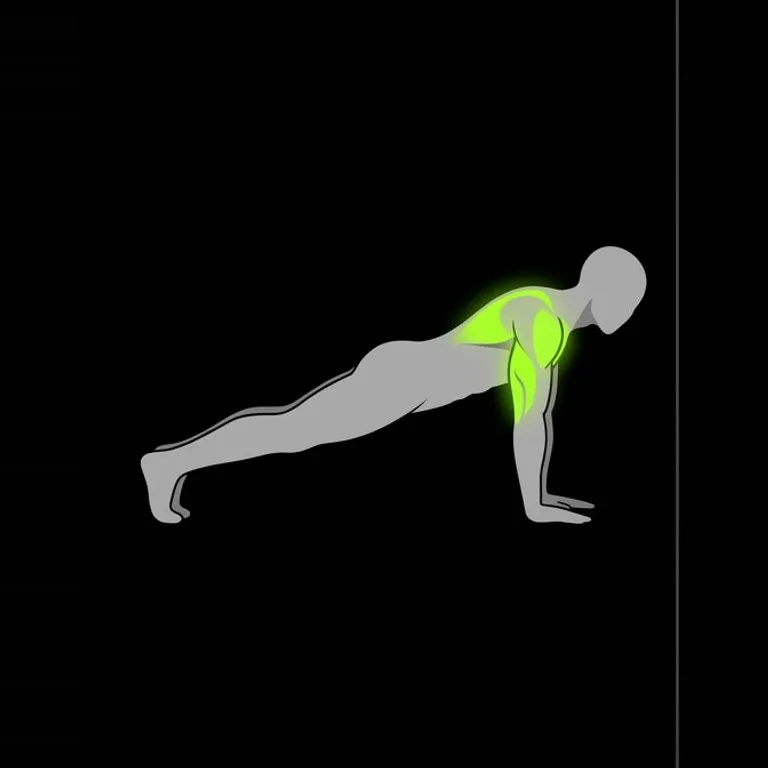
1 Set up braced, blades retracted
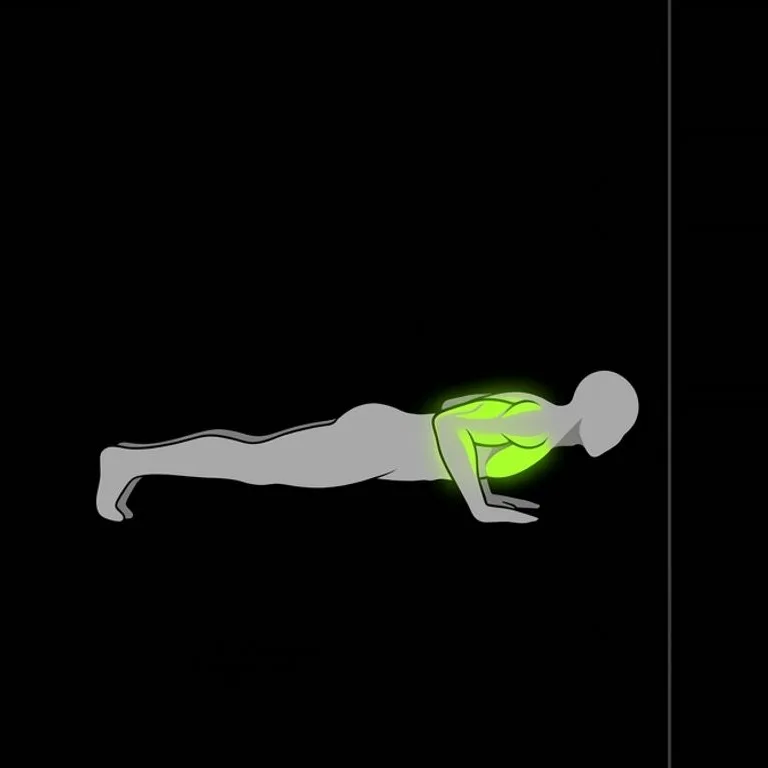
2 Lower to the target under control
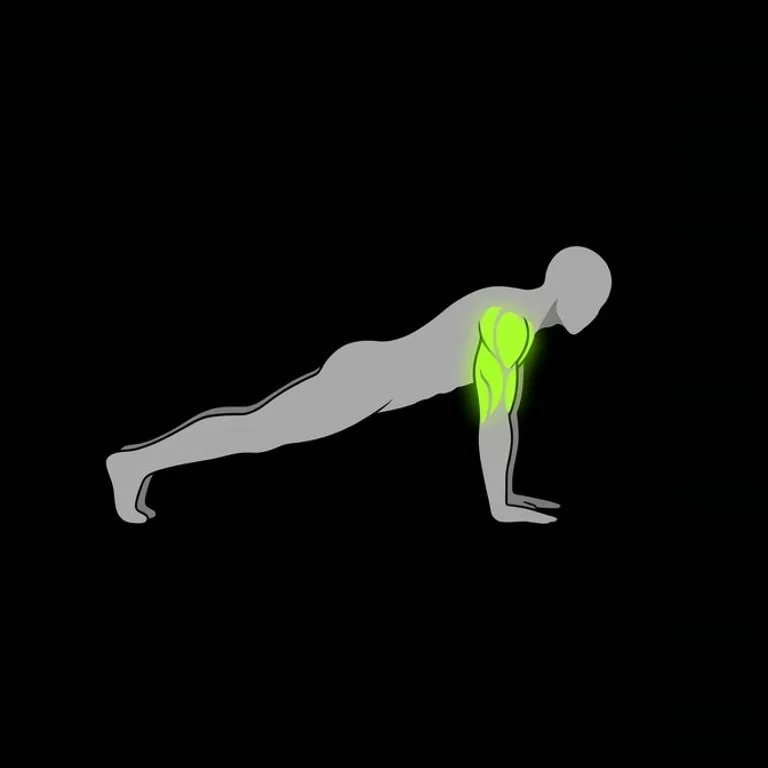
3 Press up and squeeze
Push-up at a glance
| Push-up | |
|---|---|
| Primary muscles | chest (pectoralis major) |
| Also works | triceps, front of the shoulders, abdominals |
| Equipment | Bodyweight |
| Rep range | 8–20 reps |
| Rest between sets | 60 seconds |
| Load step | Bodyweight |
The push-up is the pressing movement you can do anywhere: hands on the floor, body held straight, chest lowered and pushed back up. It trains the chest, triceps and front of the shoulders, and because you hold a plank the entire time, your trunk gets plenty of work too.
It is easy to dismiss as a warm-up, but done slowly and through a full range it is a genuine strength builder. The shoulder blades can move freely against the floor, unlike when they are pinned to a bench, which many lifters find comfortable. And because you can make it easier with your hands on a bench or harder with your feet raised, it scales from a first-ever rep to a hard set for a strong lifter.
How to set up
- Start on your hands and knees, then place your hands on the floor slightly wider than your shoulders, with your fingers spread and pointing forward.
- Step your feet back one at a time until your legs are straight and you are balanced on your hands and toes. Your feet can be together or a little apart; wider is steadier.
- Squeeze your glutes and brace your stomach so your body forms one straight line from your head through your hips to your heels.
- Stack your shoulders over your wrists, or just slightly behind them, and push the floor away so your upper back is full rather than sagging between your shoulder blades.
- Tuck your chin a little so your neck lines up with your spine. Your eyes look at the floor a short way in front of your hands.
How to do the push-up
- Bend your elbows and lower your whole body as one piece. Your elbows travel back at an angle from your torso, somewhere between pinned to your ribs and flared straight out.
- Go down until your chest is close to the floor, a fist or less away. Your hips and chest should arrive at the bottom together.
- Press the floor away to straighten your arms, keeping the body line rigid on the way up. The hips should not lead or trail.
- At the top, push a little further so your shoulder blades spread apart. That small extra reach finishes each rep and keeps the upper back working.
- Keep the pace steady and the same on every rep. When you can no longer reach the same depth with your body straight, the set is over.
Cues that help
- Body like a plank of wood. A rigid line from head to heels makes the arms and chest move the whole body, rather than letting the hips sag and shorten the rep.
- Screw your hands into the floor. Gripping the floor and turning the hands slightly outward without moving them sets the shoulders in a stable position.
- Chest to the floor, not chin. Leading with the chest keeps your neck neutral and makes sure the range comes from the arms, not from craning your head down.
- Push the floor away. Thinking about the floor moving away from you, instead of you moving up, keeps the press even through both hands.
Common mistakes
- Hips sagging toward the floor. Squeeze your glutes and brace your stomach before each set. If the hips still drop, raise your hands onto a bench until you can hold the line.
- Doing half reps near the top. Lower until your chest is just above the floor every time. A shorter set of full reps builds more than a long set of half reps.
- Elbows flared straight out in a T. Bring them back to an angle from your body. Your hands may need to move slightly lower, level with the middle of your chest.
- Head poking down to touch the floor. Keep your neck long and in line with your back, and let your chest decide when you have reached the bottom.
Who it suits
The push-up suits almost everyone. A beginner can start with hands on a wall or a sturdy bench, someone training at home needs nothing but floor space, and an experienced lifter can use it as a high-rep finisher or raise the feet to make it hard.
If your wrists complain with your palms flat, try gripping a pair of dumbbells or push-up handles so the wrist stays straight. If the movement itself causes discomfort in your shoulder, stop and choose a different press from the swaps below.
How Month6 progresses it
Month6 starts the push-up at the bottom of its range, 8 reps, and adds reps session by session until every set reaches 20.
The push-up has no plate to add, so progress on it is more reps at the same body weight, then a harder variation from the swaps below.
Rest on the push-up is 60 seconds: an isolation or bodyweight movement recovers quickly.
Progress on the push-up comes from leverage rather than plates. Lower your hands from a bench toward the floor as you get stronger, then raise your feet on a step, then add a slow lowering or a pause at the bottom.
Work toward the top of the range on every set before changing the version. When a floor push-up stops being a challenge even at the top of the range, Month6 logs each set so you can see it is time to move on to a raised-feet version or a loaded press.
Swaps
- Dip Take the dip when push-ups feel too easy and you have parallel bars. It loads the chest and triceps through a deeper range with more of your bodyweight.
- Dumbbell bench press Take the dumbbell bench press when you have weights and a bench and want to add load in steps instead of changing leverage.
- Bench press Take the barbell bench press when you are in a gym with a rack and want a heavy press you can load in small, steady jumps.
Questions
Related exercises
More chest exercises: Chest · the whole library
Technique guidance for healthy adults, not medical advice; stop if a movement hurts. How every number is made, with its citations: Sources & method.
Log it, and let the plan move with you
Month6 logs every set of the push-up in one tap, offers the swap when the station is taken, and adds load when you reach the top of the range.