How do you do a dumbbell bench press properly?
Rep range, rest and load step from the Month6 exercise catalog; last updated .
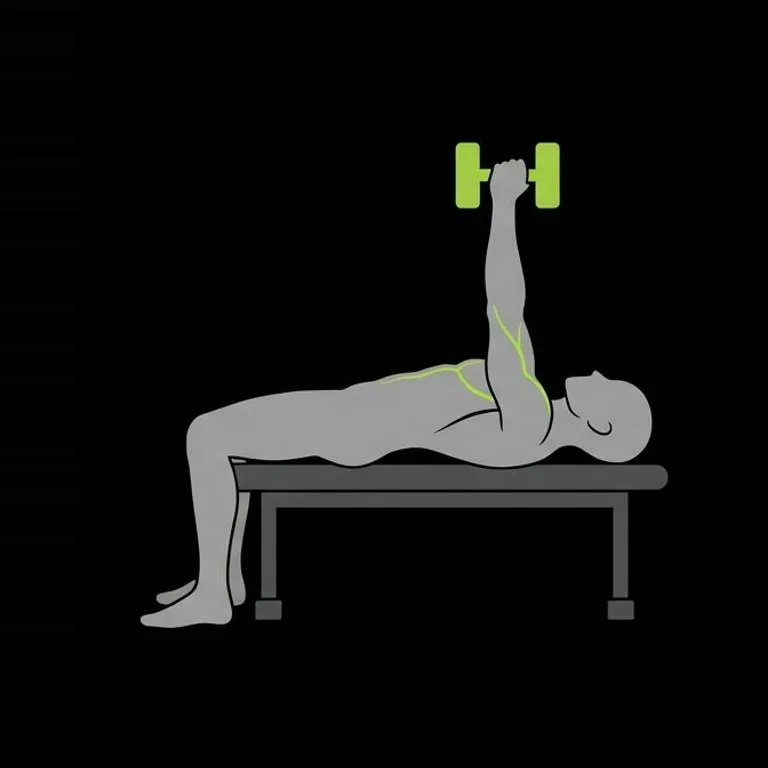
1 Set up braced, blades retracted
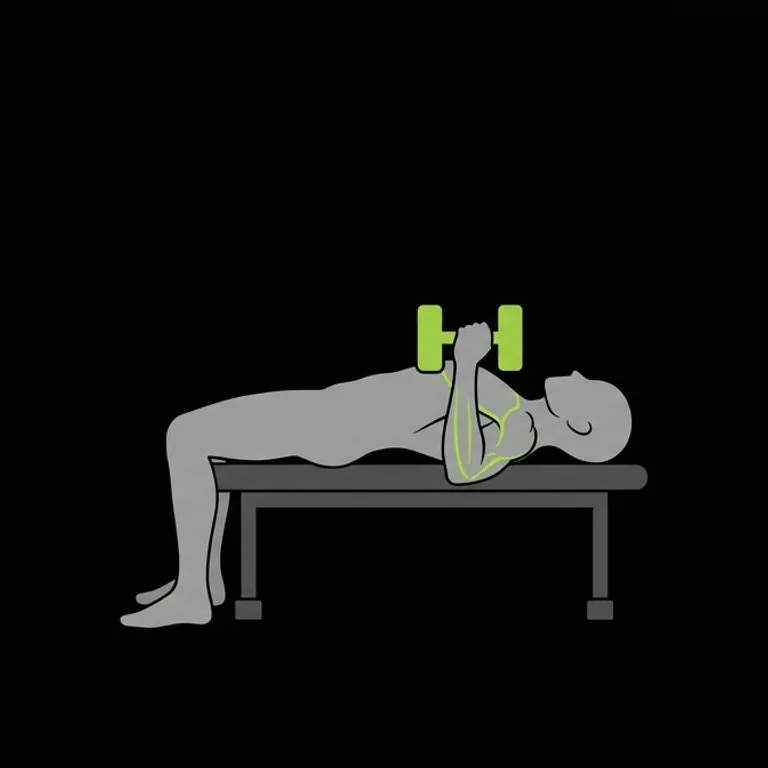
2 Lower to the target under control
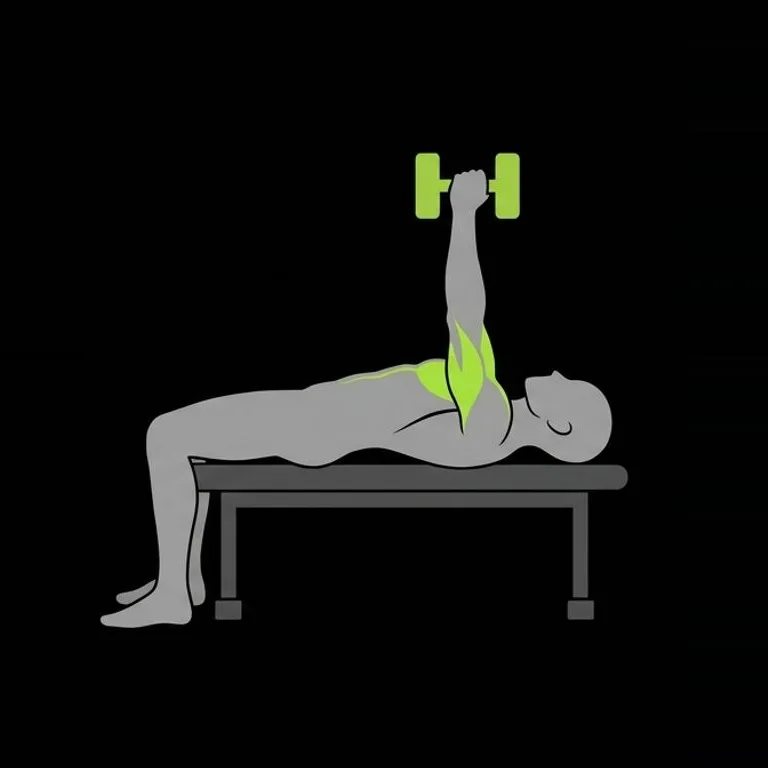
3 Press up and squeeze
Dumbbell bench press at a glance
| Dumbbell bench press | |
|---|---|
| Primary muscles | chest (pectoralis major) |
| Also works | front of the shoulders, triceps |
| Equipment | Dumbbells |
| Rep range | 8–12 reps |
| Rest between sets | 90 seconds |
| Load step | 2 kg (5 lb) |
The dumbbell bench press is a flat-bench chest press with a weight in each hand instead of a barbell across both. It looks like a small change, but it alters a lot. Each arm has to steady its own load, the hands are free to turn and travel a little closer at the top, and you can lower the weights slightly deeper than a bar allows because nothing stops at your chest.
People train it for a few reasons. It builds the same chest, shoulder and triceps muscles as the barbell version while asking more of the small stabilizers around the shoulder. It exposes a weaker side, because one dumbbell slowing down before the other is hard to hide. And it needs only a bench and a pair of weights, so it fits a crowded gym, a hotel room with a rack of dumbbells, or a garage setup with no safety arms.
How to set up
- Pick a pair of dumbbells you can control for clean reps, then sit on the end of a flat bench with the heads resting upright on your thighs, close to your knees.
- Lie back in one smooth motion and use your knees to kick the weights up toward your chest as you go. Getting them into position this way spares your shoulders from hauling heavy dumbbells off the floor at an awkward angle.
- Once you are flat, press the dumbbells up so they sit over your shoulders with your arms straight. Your palms face your feet or turn in slightly, whichever lets your wrists stay straight.
- Set your shoulder blades back and down against the pad, plant your feet wide on the floor, and let your upper back hold a gentle arch. Your head, upper back and glutes all stay in contact with the bench.
- Breathe in, brace your middle, and only then start the first rep. A rushed first rep from a loose position usually sets the tone for a wobbly set.
How to do the dumbbell bench press
- Lower both dumbbells together, letting your elbows travel down and a little toward your sides rather than flaring straight out. Your forearms stay roughly vertical under the handles the whole way.
- Stop when the dumbbells reach the sides of your chest and you feel a solid stretch across the front of it. You do not need to drop them as far as they can possibly go; stop where your shoulders still feel settled.
- Press back up along a slight inward arc, so the weights finish over your shoulders and close to each other without clanking together. Clashing the heads at the top wastes control and can knock your grip.
- Keep both sides moving at the same speed. If one arm lags, slow the stronger one to match it rather than letting the set turn into two different lifts.
- When the set is done, bring the dumbbells down to your chest, curl your knees up, and rock forward to sit with the weights back on your thighs. Dropping them wide to the floor from straight arms is how shoulders and gym floors both get hurt.
Cues that help
- Elbows under the handles. Keeping the forearm stacked beneath each dumbbell means the weight pushes straight down through the bone instead of dragging your arm out to the side.
- Squeeze the chest together at the top. Thinking of drawing your upper arms toward each other as you press keeps the chest doing the work rather than handing the finish to the shoulders.
- Pin your back to the bench. Dumbbells move in every direction, and a back that stays glued down gives each arm a fixed point to press from.
- Match the two sides. Letting the slower arm set the pace keeps the reps even and stops your stronger side from quietly doing extra work.
- Grip hard. A firm squeeze on the handle stiffens the wrist and forearm, which makes the dumbbell feel lighter and steadier in the hand.
Common mistakes
- Fighting the weights into position from the floor. Use the knee kick as you lie back. If you cannot get the dumbbells up that way, the pair is too heavy for now.
- Letting the dumbbells drift out wide at the bottom. Bring the elbows in toward your sides and keep the handles over them. A wide, sagging bottom position takes the tension off the chest.
- Banging the heads together at the top. Stop the press just before they meet. The inward arc is enough; contact adds nothing but noise and a loose grip.
- Wrists bending back under the load. Hold the handle low in your palm and keep your knuckles pointing at the ceiling. A straight wrist carries more weight with less strain.
- Rushing the lowering half. Take a slow count down to the chest. Dumbbells punish speed with wobble, and a controlled descent keeps every rep the same.
Who it suits
The dumbbell press suits most people who want a chest press, from a first-week beginner to someone who has pressed for years. It is a sensible main press if you train without a spotter, because you can always lower the weights to your chest and sit up rather than getting pinned under a bar.
It is a weaker choice when the heavier dumbbells are hard to get into place, since the setup can start to limit the lift before your chest does. If that happens, or if the movement bothers your shoulders, stop and pick a swap: a machine press takes away the balancing, and a push-up takes away the equipment.
How Month6 progresses it
Month6 starts the dumbbell bench press at the bottom of its range, 8 reps, and adds reps session by session until every set reaches 12.
When every set of the dumbbell bench press reaches the top of the range, the load goes up by the smallest sensible step for it — 2 kg (5 lb) — and the reps start again from 8.
Rest on the dumbbell bench press is 90 seconds: long enough to repeat the effort, short enough to keep the session moving.
Dumbbells usually go up in bigger relative jumps than barbells, so the move from one pair to the next can feel steep. Expect to spend a little longer at each weight, earning the top of the range with clean reps before you step up.
When the next pair feels like too much, own the reps at the lighter pair for longer and slow the lowering. Month6 logs each set, so you can see the reps climbing even in weeks when the weight on the rack does not change.
Swaps
- Bench press Take the barbell bench when you have a rack with safety arms or a spotter and want to load the press in finer steps than the dumbbell rack allows.
- Incline dumbbell press Take the incline dumbbell press when you want the same free-handed press with more emphasis on the upper chest and the front of the shoulders.
- Machine chest press Take the machine press when getting heavy dumbbells into position is the hardest part of the set, or late in a session when your stabilizers are tired.
- Push-up Take the push-up when no bench or dumbbells are free. Elevate your feet or slow each rep down as it gets easy.
Questions
Related exercises
Technique guidance for healthy adults, not medical advice; stop if a movement hurts. How every number is made, with its citations: Sources & method.
Log it, and let the plan move with you
Month6 logs every set of the dumbbell bench press in one tap, offers the swap when the station is taken, and adds load when you reach the top of the range.