How do you do an incline dumbbell press with good form?
Rep range, rest and load step from the Month6 exercise catalog; last updated .
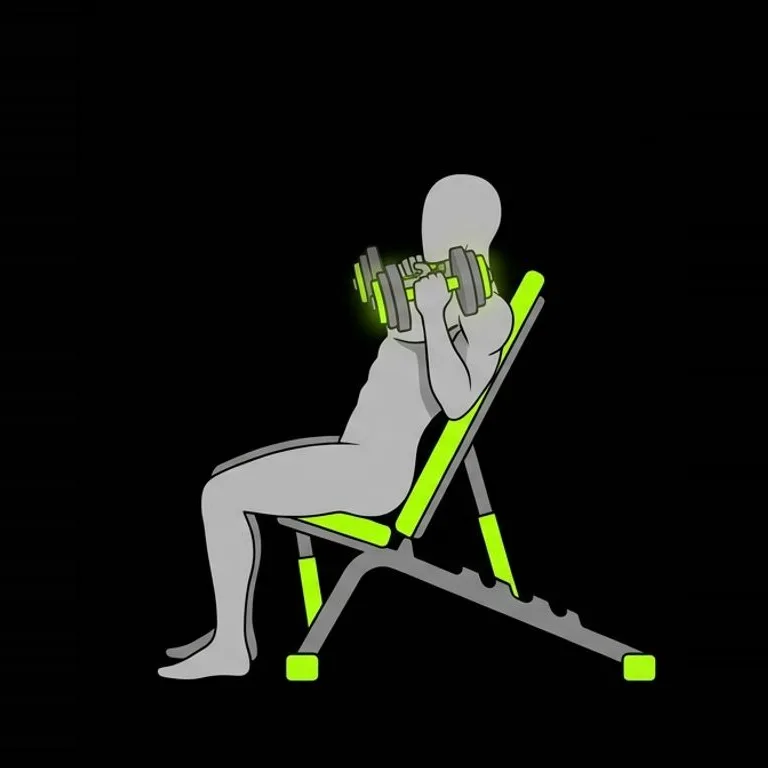
1 Set up braced, blades retracted
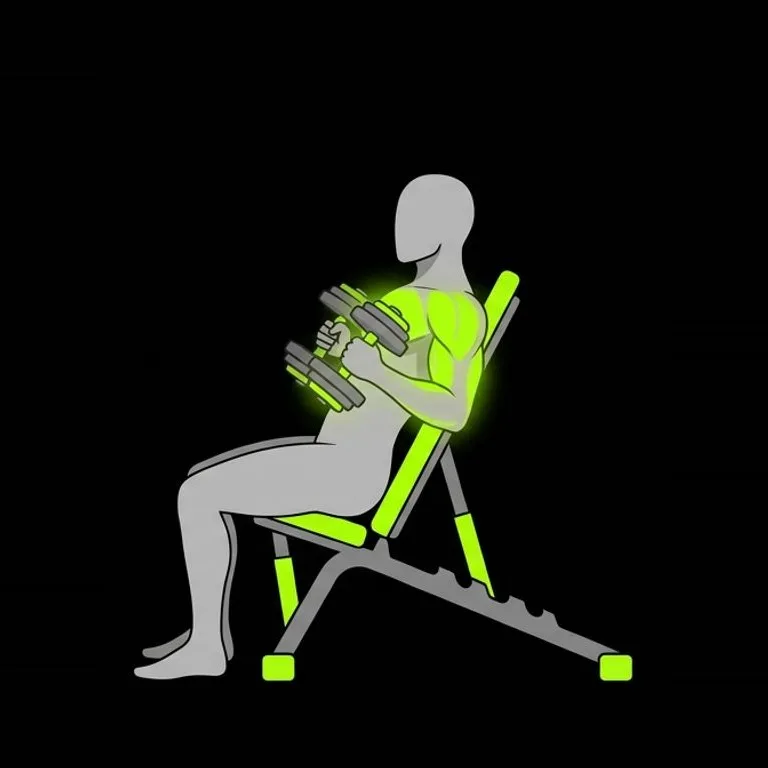
2 Lower to the target under control
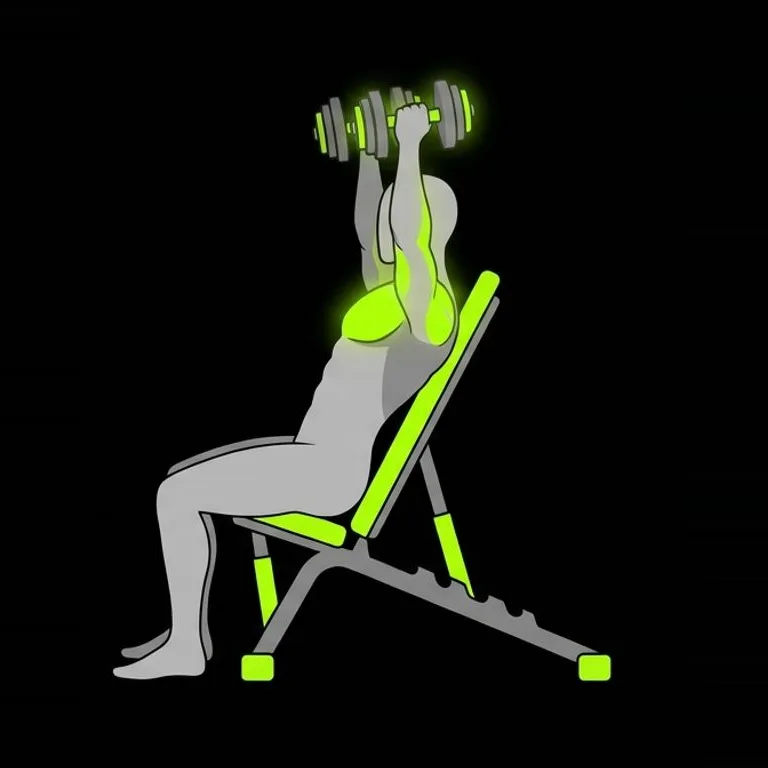
3 Press up and squeeze
Incline dumbbell press at a glance
| Incline dumbbell press | |
|---|---|
| Primary muscles | upper chest (clavicular head of the pectoralis major) |
| Also works | front of the shoulders, triceps |
| Equipment | Dumbbells |
| Rep range | 8–12 reps |
| Rest between sets | 90 seconds |
| Load step | 2 kg (5 lb) |
The incline dumbbell press is a chest press done on a bench tilted up behind you, with a dumbbell in each hand. Raising the back of the bench changes the angle your arms push at relative to your torso, which shifts more of the work toward the upper fibres of the chest and the front of the shoulders.
Lifters add it for a fuller look across the top of the chest, an area flat pressing tends to leave a step behind. Using dumbbells instead of a bar gives each arm room to settle into its own groove, which many people find kinder to the shoulders at this angle. It slots in well as the second press of an upper-body day or as the main chest movement on a lighter one.
How to set up
- Set the bench to a low incline: the first or second notch above flat on most benches. A steep back rest turns the lift into a shoulder press and takes the chest out of it.
- Sit with your hips pushed right back into the crease of the bench and the dumbbells standing on your thighs. Sitting forward on the seat leaves you sliding down the pad mid-set.
- Lean back and drive the weights up with your knees as your back meets the pad, so they arrive over your upper chest without a struggle.
- Press them to straight arms above your shoulders, draw your shoulder blades together and down, and set your feet flat and wide enough to stop you shifting on the bench.
- Look at the ceiling rather than at the weights. Keeping your head still on the pad holds your upper back in place for the whole set.
How to do the incline dumbbell press
- Lower the dumbbells toward the top of your chest, just outside and slightly below your collarbones. Your elbows sit a little in front of your body rather than level with your shoulders.
- Let the handles descend until your upper arms are a touch below the line of your torso and the top of your chest is stretched. That bottom position is where this lift does most of its work, so arrive there with control.
- Drive the weights up and slightly in, finishing with them over your shoulders and your arms straight. Because the bench is tilted, straight up means toward the ceiling, not toward your face.
- Keep your ribcage still. If your lower back peels off the pad and your chest rises to meet the weights, the bench angle has effectively flattened and the upper chest loses the emphasis you set it up for.
- Finish the set by lowering the weights to your chest, then sitting up with them resting on your thighs before you set them down.
Cues that help
- Low bench, not high. A shallow incline keeps the chest as the main mover; every extra notch hands more of the press to the shoulders.
- Aim the dumbbells at your collarbones. Lowering toward the top of the chest lines the load up with the upper fibres you are trying to train.
- Elbows slightly forward. Tucking the elbows a little in front of the body keeps the shoulder joint in a comfortable spot under load.
- Hips back, chest proud. Sitting deep in the bench and lifting the chest stops you sliding down and keeps the incline doing its job.
Common mistakes
- Setting the bench too steep. Drop it to a low incline. If your shoulders burn long before your chest does, the angle is the first thing to check.
- Arching hard enough to turn it into a flat press. Keep a gentle arch only and leave your lower back near the pad. The incline only works if your torso stays on it.
- Pressing the weights back over your face. Drive them up toward the ceiling so they finish over your shoulders. Drifting back loads the shoulder joint at its weakest.
- Cutting the bottom short. Lighten the weights until you can reach a full stretch at the top of the chest. A shallow rep skips the part that builds it.
Who it suits
The incline dumbbell press suits lifters who already press on a flat bench and want to bring the upper chest along, and beginners who find a barbell incline awkward to balance. It also fits plans that train the chest twice a week and want a different angle for the second day.
If pressing at an incline causes discomfort in your shoulder, stop and take a swap rather than pushing through. A flat dumbbell press or a machine press often sits better, and a push-up keeps chest work going with no equipment.
How Month6 progresses it
Month6 starts the incline dumbbell press at the bottom of its range, 8 reps, and adds reps session by session until every set reaches 12.
When every set of the incline dumbbell press reaches the top of the range, the load goes up by the smallest sensible step for it — 2 kg (5 lb) — and the reps start again from 8.
Rest on the incline dumbbell press is 90 seconds: long enough to repeat the effort, short enough to keep the session moving.
You will press less on the incline than on a flat bench, and that is expected rather than a weakness. The upper chest and front shoulders are doing more of the job, and they are smaller than the whole chest working together.
Move up to the next pair only once every set reaches the top of the range with the same depth at the bottom. Month6 adds load for you at that point and resets the reps, so the depth you earned stays the standard.
Swaps
- Incline bench press Take the incline barbell press when you want to load the same angle more heavily and in smaller steps, and you have a rack with safeties or a spotter.
- Dumbbell bench press Take the flat dumbbell press when an incline bench is not free or the angle sits poorly with your shoulders. You keep the free-handed press and lose only the upper-chest emphasis.
- Machine chest press Take the machine press when you want to push hard on the chest without steadying two weights, especially at the end of a session.
- Push-up Take the push-up when you have no bench or weights. Doing it with your feet raised on a step shifts it toward the same upper-chest angle.
Questions
Related exercises
Technique guidance for healthy adults, not medical advice; stop if a movement hurts. How every number is made, with its citations: Sources & method.
Log it, and let the plan move with you
Month6 logs every set of the incline dumbbell press in one tap, offers the swap when the station is taken, and adds load when you reach the top of the range.