How do you do a dumbbell lateral raise properly?
Rep range, rest and load step from the Month6 exercise catalog; last updated .
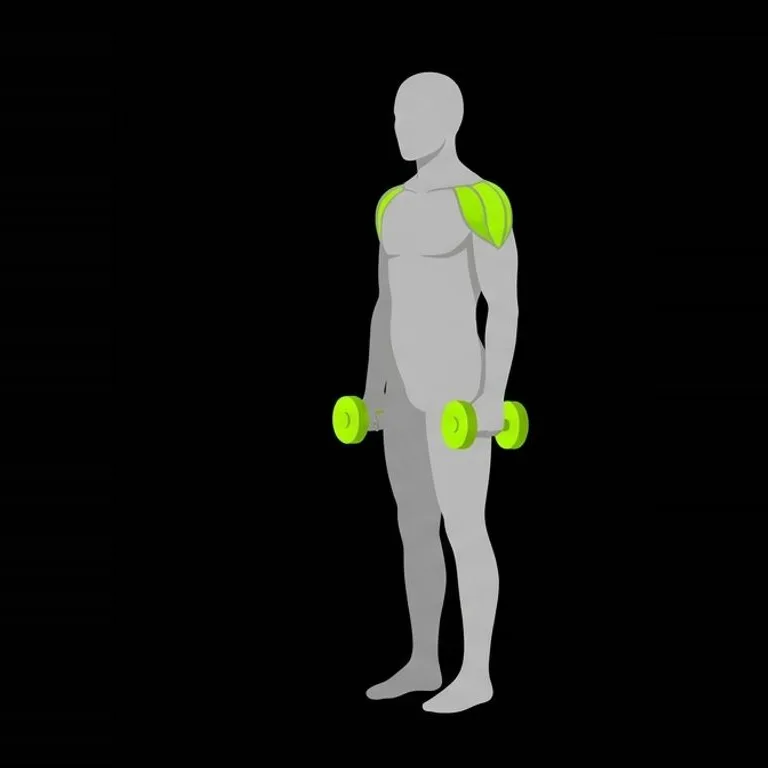
1 Set up tall and braced
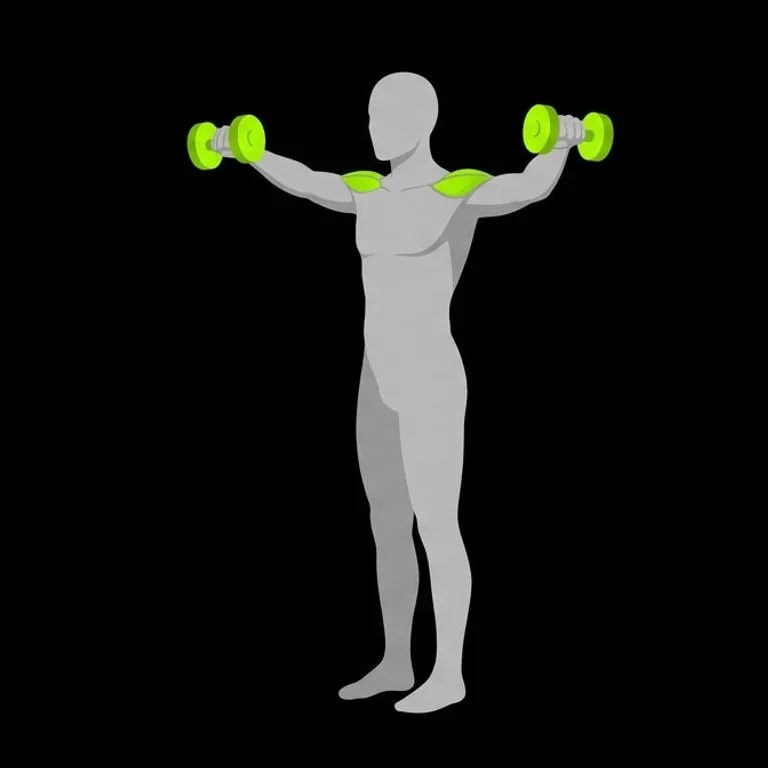
2 Press overhead in a straight path
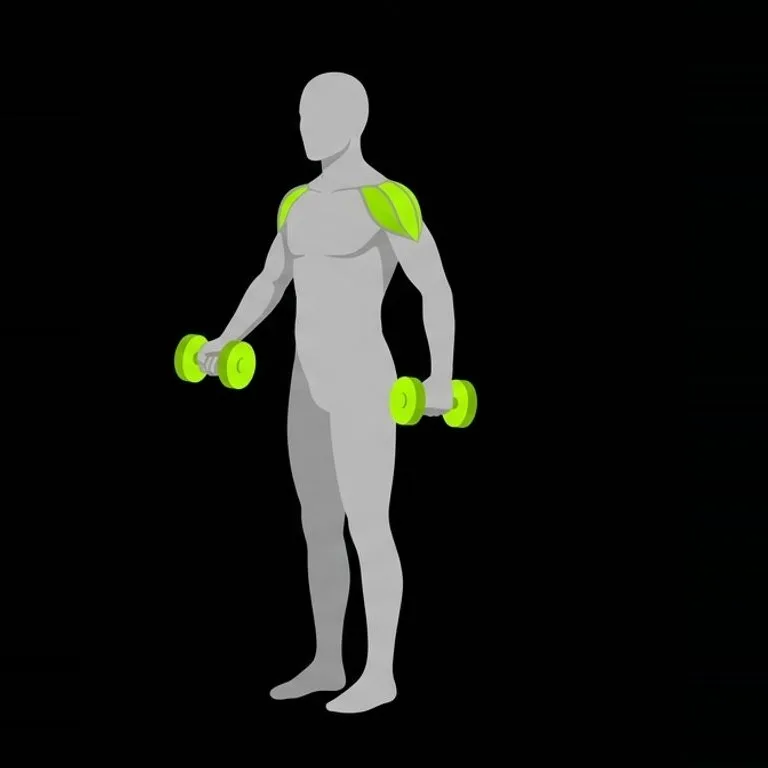
3 Lower under control to the start
Lateral raise at a glance
| Lateral raise | |
|---|---|
| Primary muscles | side of the shoulders (lateral deltoid) |
| Also works | upper traps, front and rear of the shoulders, supraspinatus (a small rotator cuff muscle) |
| Equipment | Dumbbells |
| Rep range | 12–20 reps |
| Rest between sets | 60 seconds |
| Load step | 1 kg (2.5 lb) |
The lateral raise is the simplest way to put work into the side of your shoulders. You hold a dumbbell in each hand at your sides and sweep your arms out and up until they are roughly parallel to the floor, then lower them back down. There is no pressing and no pulling; the side delt is the muscle that lifts the arm away from the body, so this movement asks it to do almost all of the work on its own.
That is why people train it. Presses hit the front of the shoulder hard and rows hit the back, but the side of the shoulder gets far less from compound lifts. It is also the part that gives the upper body its width when you look in a mirror. The raise uses light weights and higher reps, which makes it easy to fit at the end of an upper-body day without wearing you out for anything else.
How to set up
- Pick dumbbells lighter than you expect. This is a small muscle working at a long lever, and a weight that feels easy to carry across the gym can feel heavy by the end of a set. Ego is the usual reason this lift goes wrong.
- Stand with your feet about hip width apart and a slight bend in your knees. Brace your midsection lightly so your torso stays still while your arms move.
- Let the dumbbells hang at your sides or just in front of your thighs, palms facing in. Put a soft bend in your elbows and keep that same bend for the whole set; the arm should not straighten and bend as it moves.
- Lean your torso forward a touch from the hips if that feels more natural. A small lean lines the side delt up with the direction of the lift and keeps the upper traps from taking over.
- Set your shoulders down, away from your ears, before the first rep. Think long neck, relaxed jaw.
How to do the lateral raise
- Raise your arms out to the sides in a wide arc, leading with your elbows rather than your hands. Picture pushing the dumbbells away from you toward the walls on either side, not up toward the ceiling.
- Stop when your elbows reach roughly shoulder height. Going much higher mostly hands the weight to the traps, which shrug the shoulders up and take the side delt out of the job.
- Keep your hands level with or a little below your elbows at the top. Your pinky side can be slightly higher than your thumb side if that is comfortable, but you do not need to tip the dumbbells as if pouring water.
- Pause briefly at the top so you feel the side of the shoulder holding the load, then lower the weights on a slow count. The lowering is half the set, so do not just let gravity take them.
- Stop each rep just short of the dumbbells touching your legs, so the shoulder never fully switches off, then lift again. Breathe out on the way up and in on the way down.
Cues that help
- Elbows lead, hands follow. When the elbow rises first, the side delt drives the movement. When the hands lead, the forearms and the front of the shoulder start to help.
- Push the dumbbells out to the walls. Thinking wide instead of high keeps the arc long and the tension on the side of the shoulder rather than on the neck.
- Shoulders away from your ears. Keeping the shoulders down stops the upper traps from shrugging the weight up, which is the most common way this lift turns into a different exercise.
- Lower it like it is heavier than it is. A controlled descent keeps the muscle loaded through the whole rep and makes a light dumbbell do more work.
- Freeze the torso. If your body rocks to start each rep, momentum is lifting the weight instead of your shoulders.
Common mistakes
- Swinging the body to get the weights moving. Drop to a lighter pair and start each rep from a dead stop. If you cannot lift it without a hip kick, it is not your shoulders doing the lift.
- Shrugging the shoulders up as the arms rise. Set the shoulders down before the set and stop the arms at shoulder height. A slightly lower top position keeps the traps quiet.
- Locking the elbows straight. Keep a soft, fixed bend. A locked arm makes the lever longer than it needs to be and puts strain on the elbow.
- Dropping the weights on the way down. Take the lowering on a slow count and stop just before your thighs. That half of the rep is where much of the growth comes from.
- Choosing weights to impress. Pick the load that lets every rep look the same. Light weights moved well build the side delts; heavy weights thrown up mostly build momentum.
Who it suits
The dumbbell lateral raise suits almost anyone with a pair of light dumbbells, from a first-week beginner to a lifter who has trained for years. It is easy to learn, gentle to recover from and useful in any plan that wants rounder, wider shoulders.
If raising your arms to the side pinches or hurts at any point, stop and pick a swap. A cable version changes where the effort is hardest, a machine guides the path for you, and a pike push-up trains the shoulders with your body weight when you have no dumbbells.
How Month6 progresses it
Month6 starts the lateral raise at the bottom of its range, 12 reps, and adds reps session by session until every set reaches 20.
When every set of the lateral raise reaches the top of the range, the load goes up by the smallest sensible step for it — 1 kg (2.5 lb) — and the reps start again from 12.
Rest on the lateral raise is 60 seconds: an isolation or bodyweight movement recovers quickly.
Do not expect the weight on this lift to climb quickly. The jump from one dumbbell to the next is large compared with what a small muscle can add, so you will spend longer at each weight than on a press. Adding reps inside the range, slowing the lowering and pausing at the top are all real progress here.
When every rep at the top of the range looks clean, from a still body with no shrug, move up to the next pair. If your form breaks with the heavier dumbbells, stay at the old weight a little longer rather than forcing it.
Swaps
- Cable lateral raise Take the cable lateral raise when you want tension at the bottom of the rep, where the dumbbell version goes slack. Working one arm at a time on a cable also lets you focus on each shoulder separately.
- Machine lateral raise Take the machine version when you want the path fixed so you can push close to failure without the body helping. It is a good choice late in a session when focus is fading.
- Pike push-up Take the pike push-up when you have no dumbbells or cables. It trains the shoulders as a press rather than a raise, so it works the front of the shoulder more, but it keeps your shoulder day going with only the floor.
Questions
Related exercises
More shoulders exercises: Shoulders · the whole library
Technique guidance for healthy adults, not medical advice; stop if a movement hurts. How every number is made, with its citations: Sources & method.
Log it, and let the plan move with you
Month6 logs every set of the lateral raise in one tap, offers the swap when the station is taken, and adds load when you reach the top of the range.