How do you do a barbell hip thrust correctly?
Rep range, rest and load step from the Month6 exercise catalog; last updated .
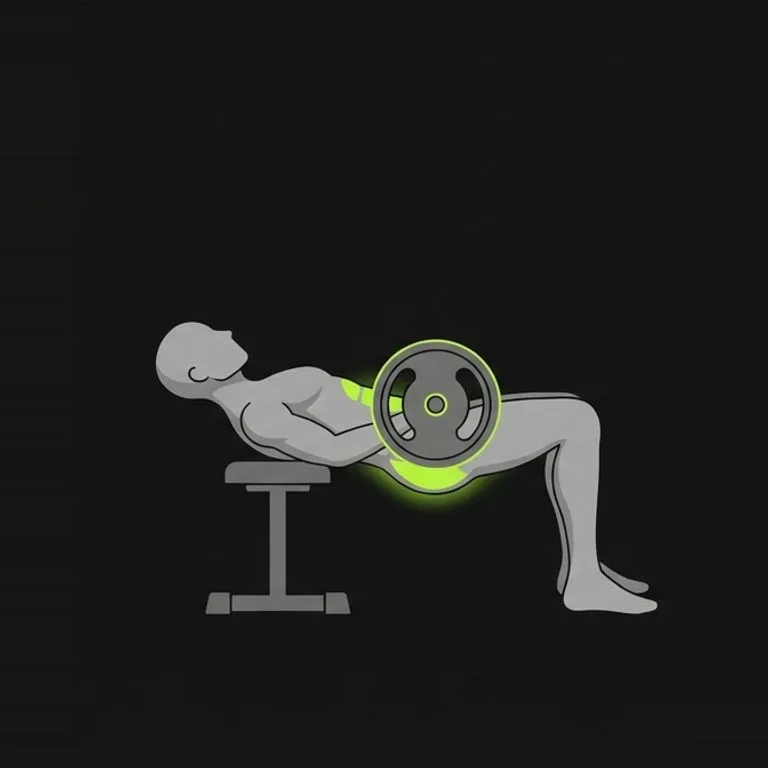
1 Set stance and brace hard
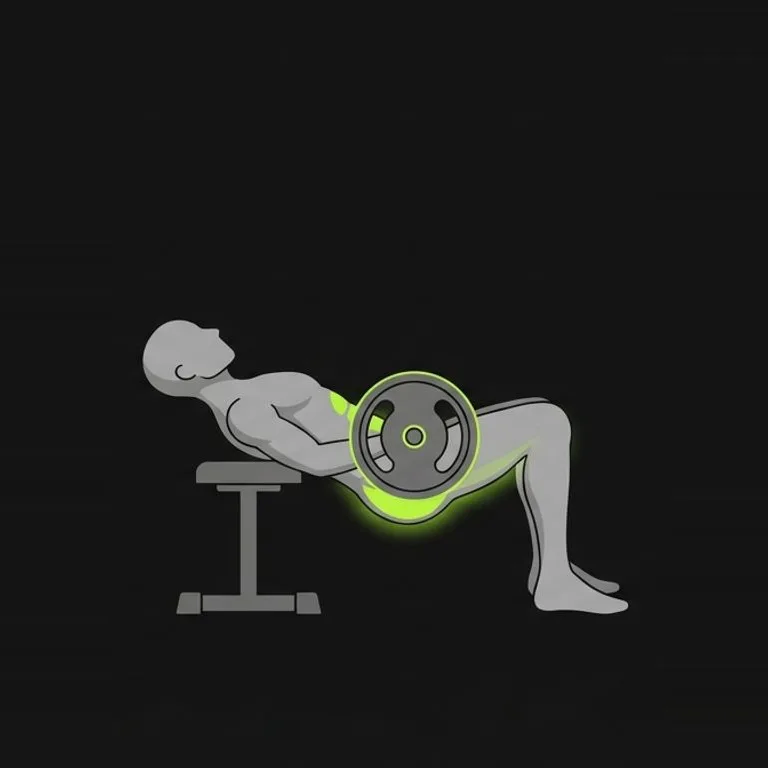
2 Descend to depth under control
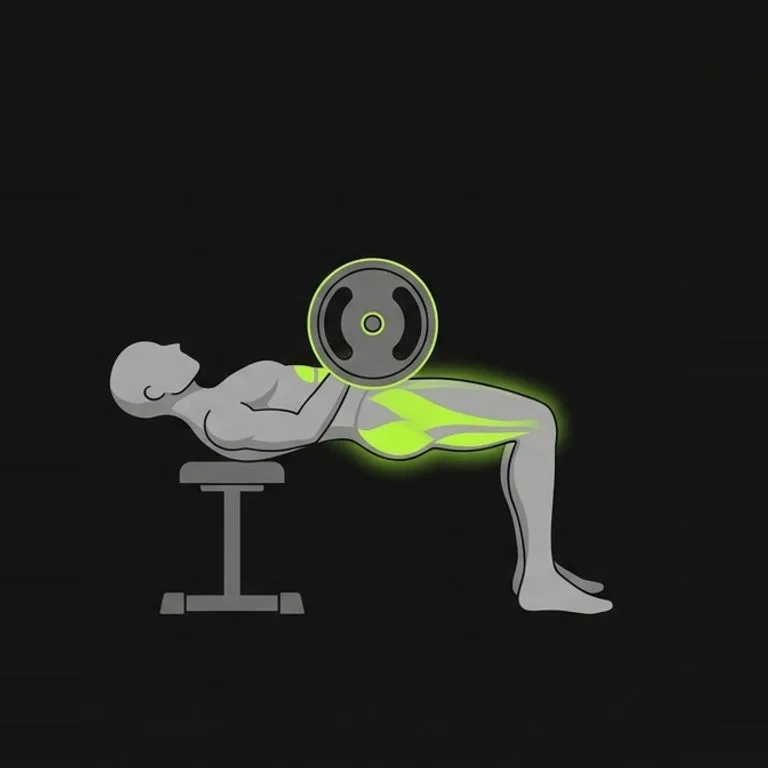
3 Drive up through mid-foot
Barbell hip thrust at a glance
| Barbell hip thrust | |
|---|---|
| Primary muscles | glutes |
| Also works | hamstrings, quadriceps, adductors, trunk muscles |
| Equipment | Gym (barbell, cable or machine) |
| Rep range | 8–12 reps |
| Rest between sets | 90 seconds |
| Load step | 2.5 kg (5 lb) |
The barbell hip thrust is a glute exercise done with your shoulders resting on a bench and a loaded bar sitting across the crease of your hips. You lower your hips toward the floor and push them back up until you are flat like a tabletop, with the glutes doing most of the lifting.
It has become a staple because it loads the glutes hardest at the top of the movement, where they are fully shortened, and because it does that without putting the bar on your back or asking you to balance. Most people can move a surprising amount of weight on it early on, which makes it a satisfying lift to progress.
It is a good partner for squats and hinges rather than a replacement for them. Those lifts load the hips most when they are deeply bent; the hip thrust fills in the other end of the range. Together they cover the glutes from a stretch to a full squeeze.
How to set up
- Pick a bench that is roughly knee height and push it against a wall or a heavy rack so it cannot slide. Sit on the floor with the lower edge of your shoulder blades against the edge of the bench.
- Roll the bar over your legs until it rests in the crease of your hips. Use a thick bar pad or a folded mat underneath it; a bare bar on the hip bones is uncomfortable enough to cut a set short.
- Bring your heels in toward your hips and set your feet about hip width apart, toes pointing forward or slightly out. Adjust the distance so that at the top of the lift your shins are close to vertical.
- Hold the bar with both hands just outside your hips to keep it from rolling. Your hands steady the bar; they do not lift it.
- Tuck your chin slightly and look ahead rather than at the ceiling. Take a breath, brace your trunk, and you are ready to lift.
How to do the barbell hip thrust
- Drive through your heels and the middle of your feet to push your hips up. The bench is the hinge point: your upper back pivots on it rather than sliding up or down.
- Rise until your hips are level with your knees and shoulders, so your torso and thighs make a flat line. Keep your ribs down so the finish comes from the hips, not from arching your lower back.
- Hold the top for a short pause and squeeze your glutes hard, as if you were trying to pinch a coin between them. This is the part of the rep that does the most work.
- Lower your hips under control until the plates are just above the floor or lightly touch it. Keep your chin tucked and your eyes forward so your head moves with your torso.
- Push straight back up without bouncing off the bottom. After the last rep, lower the bar to the floor and roll it down your legs before you stand up.
Cues that help
- Chin tucked, eyes forward. A tucked chin keeps your ribs down, which stops your lower back from arching to fake the last few inches of the lift.
- Shins vertical at the top. Vertical shins keep the load on the glutes; feet too far out shifts it to the hamstrings, and feet too close shifts it to the thighs.
- Push the floor away with your heels. Driving through the back of the foot keeps the glutes as the main movers instead of the front of the thighs.
- Hips to the ceiling, ribs to the hips. Thinking of tilting the pelvis up while the ribs stay down gives a full lockout without leaning on the lower back.
- Pause and squeeze before you lower. The top is where the glutes are working hardest, and a held squeeze makes each rep count instead of swinging through it.
Common mistakes
- Arching the lower back to finish the rep. Tuck your chin and keep your ribs down. If you can only reach the top by arching, the load is too heavy for a clean lockout.
- Feet placed too far from the bench. Walk your heels in until your shins are vertical at the top. You should feel the glutes, not a cramp in the hamstrings.
- Sliding up the bench during the rep. Set the bench edge just below your shoulder blades and keep it as a fixed pivot. A bench that moves needs to go against a wall.
- Stopping short of full hip extension. Lower the weight until you can reach a flat tabletop on every rep. Half reps at the top weight leave the hardest part of the lift undone.
- Rushing the lowering. Take a slow count down and keep tension in the glutes. Dropping the hips fast turns the next rep into a bounce.
Who it suits
The hip thrust suits anyone who wants stronger or bigger glutes, and it is especially useful for lifters whose squats and deadlifts leave the glutes underworked. It is easy to learn and asks very little of balance or flexibility.
Setting up a heavy bar takes some room and a stable bench, so in a busy gym or at home the swaps below are a fair stand-in. If the bar position is uncomfortable even with a pad, or if the movement causes pain, stop and choose a swap.
How Month6 progresses it
Month6 starts the barbell hip thrust at the bottom of its range, 8 reps, and adds reps session by session until every set reaches 12.
When every set of the barbell hip thrust reaches the top of the range, the load goes up by the smallest sensible step for it — 2.5 kg (5 lb) — and the reps start again from 8.
Rest on the barbell hip thrust is 90 seconds: long enough to repeat the effort, short enough to keep the session moving.
The glutes are strong, so the load on this lift tends to climb faster than on most upper-body work. The limit is usually the lockout: progress the weight only when every rep reaches a flat, held top position.
When you reach the top of the rep range with clean lockouts, Month6 adds the next load step and returns you to the bottom of the range. If the pause at the top starts to disappear, hold the load until it comes back.
Swaps
- Glute bridge Take the glute bridge when there is no bench or bar free, or when you want a lighter option. Your shoulders stay on the floor, so the range is shorter, but the hip drive is the same.
- Romanian deadlift Take the Romanian deadlift when you want to load the glutes and hamstrings through a long stretch instead of a hard squeeze at the top. It also trains a flat back under load.
- Dumbbell Romanian deadlift Take the dumbbell Romanian deadlift when you are training with dumbbells only and still want a loaded hip exercise. It suits a home setup or a crowded gym floor.
Questions
Related exercises
More legs exercises: Legs · the whole library
Technique guidance for healthy adults, not medical advice; stop if a movement hurts. How every number is made, with its citations: Sources & method.
Log it, and let the plan move with you
Month6 logs every set of the barbell hip thrust in one tap, offers the swap when the station is taken, and adds load when you reach the top of the range.