How do you use the leg press machine with good form?
Rep range, rest and load step from the Month6 exercise catalog; last updated .
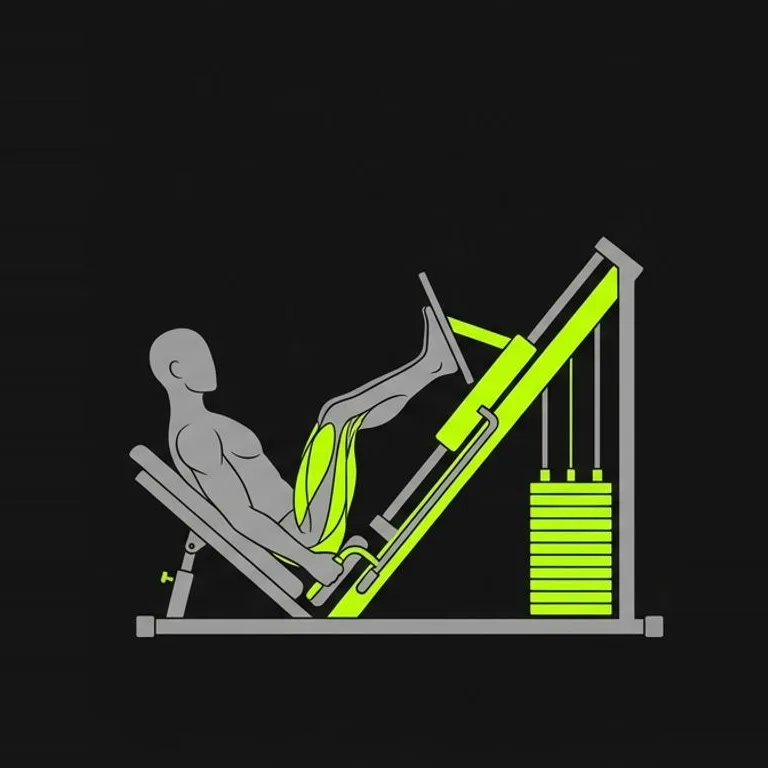
1 Set stance and brace hard
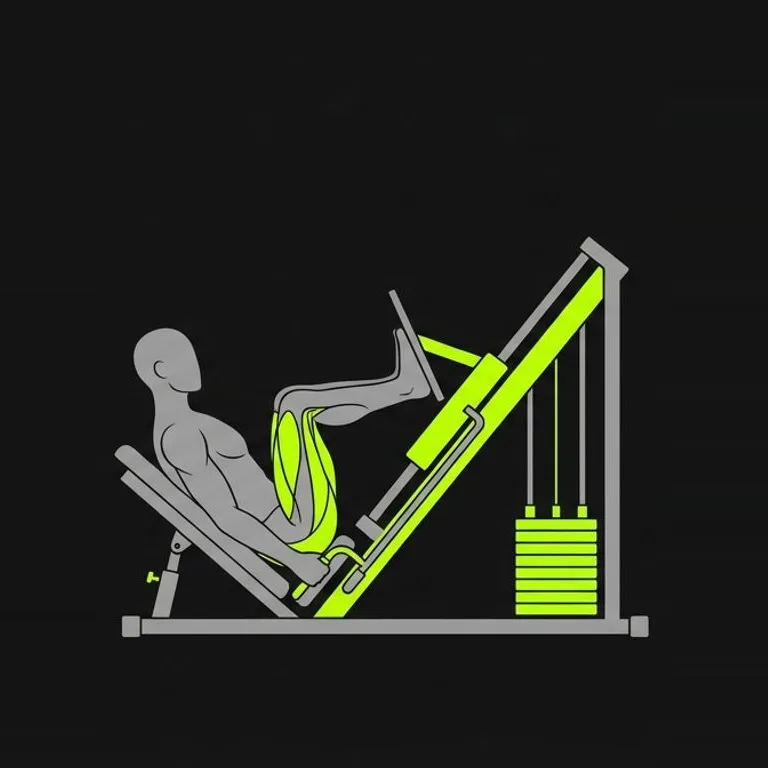
2 Descend to depth under control
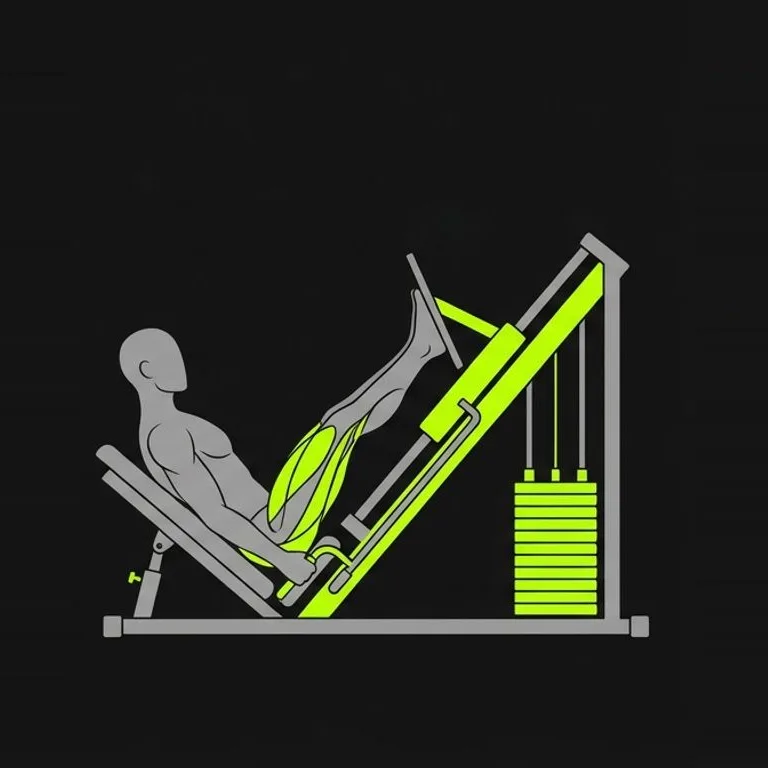
3 Drive up through mid-foot
Leg press at a glance
| Leg press | |
|---|---|
| Primary muscles | quadriceps (front of the thighs) |
| Also works | glutes, adductors (inner thighs), hamstrings |
| Equipment | Gym (barbell, cable or machine) |
| Rep range | 10–15 reps |
| Rest between sets | 90 seconds |
| Load step | 5 kg (10 lb) |
The leg press is a machine where you sit or recline against a padded back rest and push a weighted sled or platform away with your feet. The machine guides the path, so the whole effort goes into bending and straightening your knees and hips with no bar to balance and no trunk holding a load overhead.
That is its strength. With the balance and bracing taken care of, you can push the thighs close to their limit safely, even when you are tired or still learning to squat. It is a common second lift on a leg day after squats, and a solid main lift for anyone who does not squat with a barbell at all.
Machines vary: some slide on a forty-five degree track, some are horizontal, and some move the seat instead of the platform. The principles below hold for all of them. Spend your first session on any new machine with light weight while you learn where your feet and the seat feel best.
How to set up
- Adjust the back rest so you can bend your knees deeply without your hips curling off the seat. A more upright back rest shortens the range; a more reclined one usually allows more depth.
- Sit all the way back so your hips and lower back are flat against the pad. Hold the handles at your sides to keep yourself pinned in place.
- Place your feet on the platform about shoulder width apart, in the middle from top to bottom, with your toes turned out slightly. Your whole foot, heel included, stays in contact for every rep.
- Press the platform up a little and release the safety catches. Check that you can reach them again easily, because you will lock them back in at the end of the set.
- Start each set with your legs almost straight but not locked, your knees pointing the same way as your toes.
How to do the leg press
- Bend your knees and let the platform come down toward you under control. Your knees travel toward your shoulders, tracking in line with your toes rather than falling inward.
- Lower until your knees are bent deeply, roughly where your thighs come close to your chest, or until just before your lower back would start to peel off the pad. That point is your bottom for the set.
- Without bouncing, press the platform away by pushing through the whole foot. Think of driving your heels and the balls of your feet evenly through the plate.
- Straighten your legs until they are almost locked, keeping a small bend so the load stays on your muscles rather than resting on your joints.
- Keep your head back on the pad and breathe out on the way up, in on the way down. After the last rep, re-engage the safety catches before you take your feet off the platform.
Cues that help
- Glue your lower back to the seat. Keeping the pelvis flat on the pad sets your safe bottom position and keeps the work in the legs instead of the spine.
- Knees follow your toes. Tracking the knees over the feet keeps the push even through the joint and stops the thighs from caving in under a heavy load.
- Whole foot, every rep. Pressing through heel and forefoot together spreads the effort across the thigh and hips and keeps your heels from lifting off the plate.
- Soft knees at the top. Stopping just short of lockout keeps tension on the quads for the whole set and keeps a heavy sled off straight knees.
- Slow on the way in. Controlling the lowering lets you reach a consistent depth and makes the bottom position something you choose rather than something the sled pushes you into.
Common mistakes
- Lowering so far that your hips roll off the seat. Find the depth where your lower back stays flat and stop there. Adjust the back rest or foot placement if that point is very shallow.
- Locking the knees out hard at the top. Stop with a slight bend. If you catch yourself snapping into lockout, slow down the last part of every press.
- Loading the sled far beyond what you can control through a full range. Strip the weight back until your reps reach real depth. A huge stack moved a short distance does far less than a moderate one moved all the way.
- Heels lifting off the platform at the bottom. Move your feet a little higher on the plate, or reduce depth slightly, so you can press through the whole foot.
- Pushing on your knees with your hands. Keep your hands on the handles. If you need your hands to finish a rep, the set is done.
Who it suits
The leg press suits nearly everyone who wants bigger, stronger thighs. It is especially useful for beginners still building squat technique, for lifters who want to add leg volume after a heavy squat, and for anyone whose back is tired from other lifts that week.
If your gym does not have one or it is taken, the swaps below cover the same muscles. If the bottom of the movement causes pain rather than effort, shorten the range or stop and choose a swap.
How Month6 progresses it
Month6 starts the leg press at the bottom of its range, 10 reps, and adds reps session by session until every set reaches 15.
When every set of the leg press reaches the top of the range, the load goes up by the smallest sensible step for it — 5 kg (10 lb) — and the reps start again from 10.
Rest on the leg press is 90 seconds: long enough to repeat the effort, short enough to keep the session moving.
Because the machine handles balance, the load tends to climb quickly. Keep the depth honest as it does: the same range on every rep is what makes the numbers comparable from week to week.
Month6 logs each set and adds the next load step once you reach the top of the rep range, then drops you back to the bottom of the range to climb again. The higher rep range on this lift is deliberate; the thighs respond well to longer sets here.
Different machines carry different sled weights and angles, so a number on one leg press will not match another. If you change gyms or machines, start a little lighter and rebuild from there.
Swaps
- Hack squat Take the hack squat when you want a machine that puts you in a more upright squat position with your back against a pad. It tends to work the front of the thighs very directly.
- Goblet squat Take the goblet squat when the machines are all busy or you only have dumbbells. It trains the same squat pattern with a load held at your chest.
- Dumbbell split squat Take the split squat when you want each leg to work on its own, or when you only have a pair of dumbbells. It also makes balance and the hips work harder.
- Back squat Take the barbell back squat when you want to train the legs and trunk together under a heavy bar. It asks more of your balance and bracing than the machine does.
- Bodyweight squat Take the bodyweight squat when you have no equipment at all. Slow the lowering or add a pause at the bottom to keep it challenging.
Questions
Related exercises
More legs exercises: Legs · the whole library
Technique guidance for healthy adults, not medical advice; stop if a movement hurts. How every number is made, with its citations: Sources & method.
Log it, and let the plan move with you
Month6 logs every set of the leg press in one tap, offers the swap when the station is taken, and adds load when you reach the top of the range.