How do you do a goblet squat?
Rep range, rest and load step from the Month6 exercise catalog; last updated .
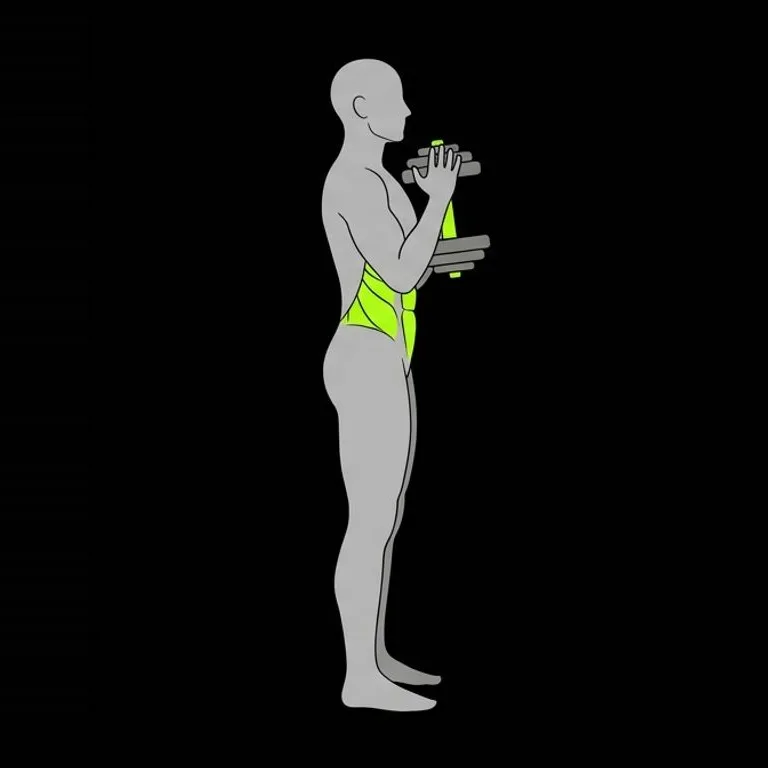
1 Set stance and brace hard
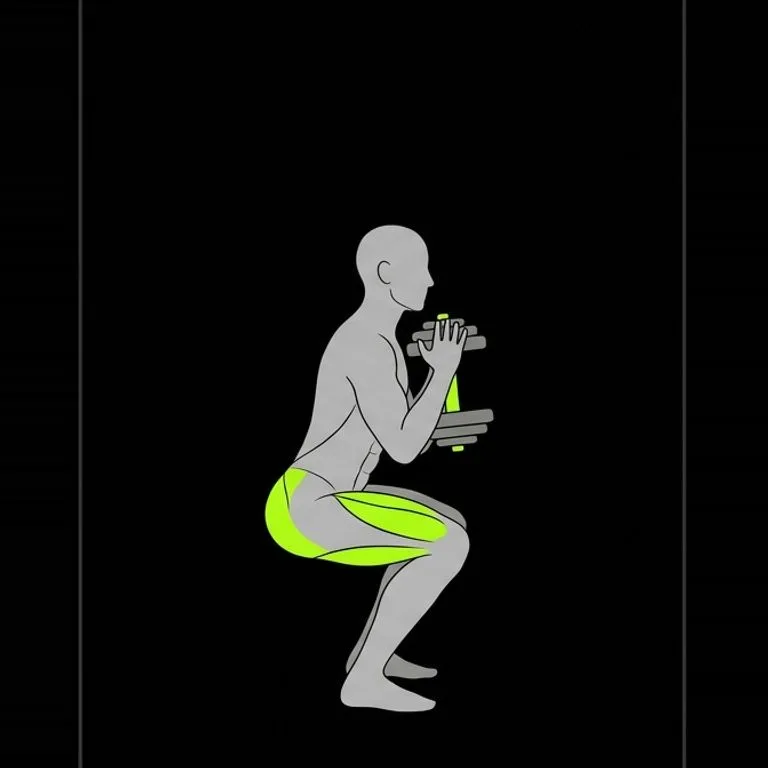
2 Descend to depth under control
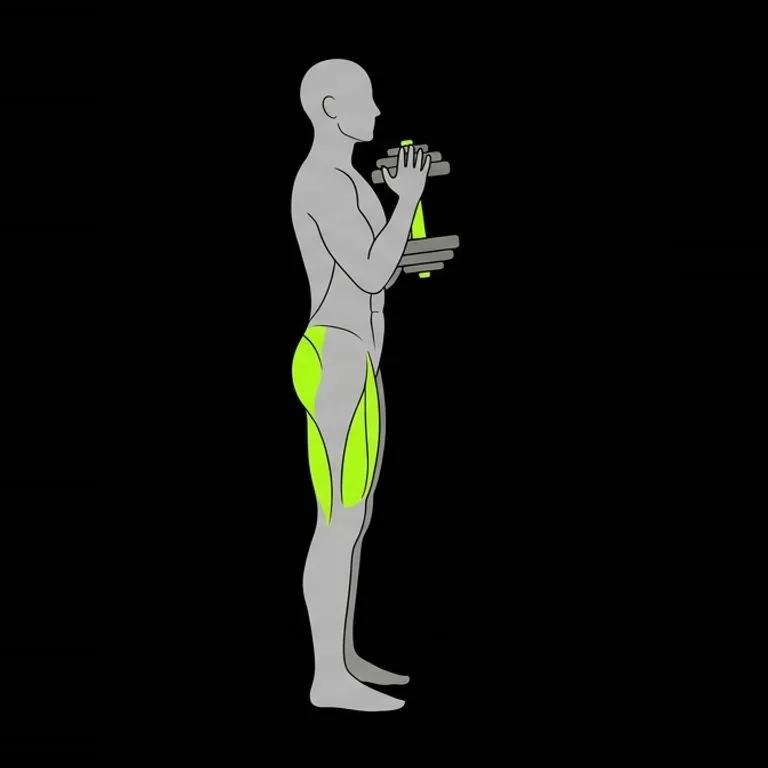
3 Drive up through mid-foot
Goblet squat at a glance
| Goblet squat | |
|---|---|
| Primary muscles | quadriceps (front of the thighs), glutes |
| Also works | adductors (inner thighs), upper back, trunk muscles |
| Equipment | Dumbbells |
| Rep range | 10–15 reps |
| Rest between sets | 90 seconds |
| Load step | 2 kg (5 lb) |
The goblet squat is a squat where you hold a single dumbbell or kettlebell in front of your chest, the way you might cradle a large cup. The weight sits in front of you, so it pulls your torso upright and lets your hips sink between your heels with little effort spent on balance.
It is often the first loaded squat people learn, and for good reason. The front load teaches you to stay tall, keep your knees tracking out and reach real depth, all things that carry over to barbell squats later. It needs only one dumbbell, so it works in a crowded gym, a hotel room or a garage.
It is not just a beginner drill. The thighs get a lot of work at depth, the upper back works hard to keep the dumbbell close, and the higher rep range keeps the muscles under tension for a long set. Many lifters keep it in their plan for good.
How to set up
- Pick up a dumbbell and stand it on one end. Cup the upper head of the dumbbell with both palms, fingers wrapped around the plate, so it hangs vertically in front of your breastbone.
- Pull the dumbbell in until it touches your chest and keep your elbows pointing down. The closer the weight sits to your body, the lighter it feels.
- Stand with your feet slightly wider than your hips and your toes turned out a little. You need room for your elbows to fit between your knees at the bottom.
- Spread your weight across the whole foot: big toe, little toe and heel all pressing into the floor.
- Lift your chest, take a breath into your belly and tighten your trunk before the first rep.
How to do the goblet squat
- Bend your knees and hips at the same time and sit straight down, as if lowering onto a low stool directly beneath you.
- Let your knees move forward and out so your elbows slide inside them. At the bottom, your elbows can lightly nudge your knees apart.
- Go as deep as you can with your heels flat and your back keeping its shape. For many people the goblet squat allows a deeper squat than a barbell does, with the hips below the knees.
- Pause briefly at the bottom, then drive through your whole foot to stand. Keep the dumbbell glued to your chest so it does not drift forward and tip you.
- Stand fully upright between reps and take a fresh breath before you sit back down.
Cues that help
- Hold the bell like a cup of hot coffee. Keeping the dumbbell tight to your chest and level stops it pulling you forward and keeps your upper back working.
- Elbows inside the knees. Using your elbows as a guide at the bottom pushes your knees out over your toes and opens up the hips for depth.
- Sit down, not back. Dropping straight between your heels keeps you upright; reaching your hips far behind you shifts you onto your toes.
- Tall chest the whole way. An upright torso keeps the load over the middle of your foot and makes the bottom of the squat easier to own.
- Tripod foot. Pressing through the big toe, little toe and heel together gives a stable base and keeps the arches from collapsing.
Common mistakes
- Letting the dumbbell drift away from the chest. Squeeze it in with your forearms and keep your elbows down. If it keeps slipping, use a lighter dumbbell until your upper back can hold it.
- Rising onto the toes at the bottom. Shift your weight back to the middle of the foot, widen your stance slightly, or turn your toes out a little more.
- Knees falling inward as you stand up. Push your knees out against your elbows at the bottom and keep pushing them out as you rise.
- Stopping well above parallel. Use the front load to sit deeper. If depth is tight, a short pause at the bottom of each rep helps you get comfortable there.
- Rounding the upper back under the weight. Lift your chest before each rep and choose a dumbbell your upper back can hold upright for the whole set.
Who it suits
The goblet squat suits beginners learning to squat, anyone training with only dumbbells or kettlebells, and experienced lifters who want an upright, deep squat to build the thighs. It is also a good warm-up before heavier squats.
Its main limit is the weight you can hold at your chest: once the heaviest dumbbell you can carry is no longer a challenge for the full set, move to one of the heavier swaps below. If squatting deep causes pain, shorten the range or stop and choose a swap.
How Month6 progresses it
Month6 starts the goblet squat at the bottom of its range, 10 reps, and adds reps session by session until every set reaches 15.
When every set of the goblet squat reaches the top of the range, the load goes up by the smallest sensible step for it — 2 kg (5 lb) — and the reps start again from 10.
Rest on the goblet squat is 90 seconds: long enough to repeat the effort, short enough to keep the session moving.
Progress here usually comes in small dumbbell jumps, and the higher rep range gives you room to add reps before you add weight.
Month6 logs your sets and, when you reach the top of the rep range with good depth, moves you to the next dumbbell and resets you to the bottom of the range. When holding the dumbbell starts to feel harder than the squat itself, the barbell or a leg press is the natural next step.
You can also make the same dumbbell feel heavier by slowing the lowering or adding a pause at the bottom of every rep. Both keep the legs working without needing more weight.
Swaps
- Back squat Take the barbell back squat when the goblet squat no longer challenges you with the heaviest dumbbell you can hold, or when you want to train under a much heavier load.
- Front squat Take the front squat when you like the upright position of the goblet squat but need more load. The barbell sits across the front of your shoulders instead of in your hands.
- Leg press Take the leg press when you want to train the thighs hard without holding a weight at your chest, for example when your upper back is already tired.
- Dumbbell split squat Take the split squat when you want to work one leg at a time with the same dumbbells, or when you want to make lighter weights feel much harder.
- Bodyweight squat Take the bodyweight squat when you have no weights, or to practise depth and positioning before adding a load.
Questions
Related exercises
Technique guidance for healthy adults, not medical advice; stop if a movement hurts. How every number is made, with its citations: Sources & method.
Log it, and let the plan move with you
Month6 logs every set of the goblet squat in one tap, offers the swap when the station is taken, and adds load when you reach the top of the range.