Can you build muscle after 50, and how much?
Yes, muscle still grows after 50. How much a beginner can expect at each age, from a cited meta-analysis, and how to start lifting steadily.
Updated 8 min readFigures computed by the Month6 engine
On this page · 7 sections
Starting to lift in your fifties or sixties comes with a question younger beginners never ask: is it still worth it? The honest answer is yes, with a clear picture of what to expect. Muscle keeps responding to training at every age that has been studied. It responds more slowly than it did at twenty-five, and a good plan is built around that rather than pretending otherwise.
This post puts numbers on it. Every figure comes from the same arithmetic the Month6 app runs on your own stats, including the age factor it applies from forty, which is set from a published meta-analysis of older lifters. The example bodies are invented and labelled, and none of this is medical advice: if you have a heart, joint or other health condition, or have not exercised in a long time, check with your doctor before you start.
Can you build muscle after 50?
Yes. The study Month6 relies on pooled 49 resistance-training trials in adults aged 50 to 83. On average, participants added 1.1 kg of lean mass over about 21 weeks of training. Older participants gained less than younger ones, but the gains did not disappear at any age in the data.
That finding matters more than any single number in it. It means the choice is not between building muscle and accepting decline. It is between a slower climb and no climb at all, and a slower climb, kept up for a year, adds up to a body that is visibly stronger and more capable.
Most people who start lifting at this age notice strength first. Carrying shopping, climbing stairs and getting up from the floor get easier within the first weeks, well before muscle shows in the mirror. Count that as progress, because it is.
How much muscle can you gain after 50?
The Month6 engine starts from the beginner rate, 0.8–1.2 kg a month for men and 0.4–0.6 kg for women, and from 40 multiplies it by an age factor. Each factor from fifty is set so that a beginner man's headline rate stays at or below what the meta-analysis reports for the middle of that decade. The factor for the forties is Month6's own halfway step, because the study included no one under fifty.
| Age | Rate kept | Men, a month | Women, a month |
|---|---|---|---|
| Under 40 | 100% | 0.8–1.2 kg | 0.4–0.6 kg |
| 40–49 | 65% | 0.52–0.78 kg | 0.26–0.39 kg |
| 50–59 | 30% | 0.24–0.36 kg | 0.12–0.18 kg |
| 60–69 | 24% | 0.19–0.29 kg | 0.1–0.14 kg |
| 70+ | 16% | 0.13–0.19 kg | 0.06–0.1 kg |
Rate kept: the share of the under-40 rate the engine applies. Rates before the slow-down near the natural ceiling; the factor scales both ends of the range.
Here is what that means for one example body over a year of recomposition, where calories stay at maintenance and muscle is built while fat comes off. The body is the same at every age: only the birthday changes.
Kg of muscle. Invented example bodies; estimates from the Month6 engine that assume at least 80% adherence.
| Series | Age 30 | Age 45 | Age 55 | Age 65 | Age 72 |
|---|---|---|---|---|---|
| Muscle by month 12 | 2.9 kg of muscle | 1.9 kg of muscle | 0.9 kg of muscle | 0.7 kg of muscle | 0.5 kg of muscle |
And here are two example bodies side by side with their younger selves, a 56-year-old woman (164 cm, 68 kg, 34% body fat) who has never lifted and a 55-year-old man (178 cm, 84 kg, 26% body fat) who has never lifted, both on a recomp:
| Example body | Muscle, month 6 | Muscle, month 12 | Fat, month 12 |
|---|---|---|---|
| Woman at 30 | +1.4 kg | +2.9 kg | −2.9 kg |
| Same woman at 56 | +0.4 kg | +0.9 kg | −0.9 kg |
| Man at 30 | +2.9 kg | +5.3 kg | −5.3 kg |
| Same man at 55 | +0.9 kg | +1.7 kg | −1.7 kg |
The woman is 164 cm, 68 kg and 34% body fat; the man 178 cm, 84 kg and 26% body fat; both new to lifting. Only the age changes.
The fifty-something figures are smaller, and they are deliberately conservative. A woman's rate in the engine is already set at half a man's, so her curve sits further below the paper than his. If your own results beat the projection, the app redraws the curve from what you actually log. The Month 6 projection runs this on your own age, height, weight and body fat.
A recomp moves the scale very little, so the change shows in shape and strength rather than weight. For the example woman, 0.9 kg (2.0 lb) of muscle gained and 0.9 kg (2.0 lb) of fat lost by month twelve leaves the scale flat and the clothes fitting differently.
Is it too late to start lifting at 50?
No. What sets your rate in the engine is your training age, not only your birthday, and a true beginner gets the beginner rate whatever their age, adjusted by the age factor. Someone starting at fifty-five has their fastest year of progress ahead of them, exactly like someone starting at twenty-five. The year is simply slower in absolute terms.
At any age, what predicts results is consistency. A plan you can repeat for a year beats an ambitious one you drop in March. That is why the app starts older lifters with fewer sessions and gentler equipment, then lets the plan grow as you do.
The fastest year of your lifting life starts on the day you start, whatever age that day falls on.
How many days a week should you lift after 50?
Month6 suggests 3 sessions a week for most beginners and 2 from 55. Fewer, well-recovered sessions beat more sessions done tired. You can always add a day once the first few months feel easy.
The plan is a rotation rather than a calendar. If you miss Tuesday, the session waits for your next visit instead of being lost, and your pace is measured over a rolling week. That matters more after fifty, when a stiff morning or a busy week is more likely to move a session than to cancel it.
Within each session, the weekly volume target for a major muscle group is 10–20 hard sets, built up to over time rather than started at. Early on, fewer sets done with good form is the right amount.
Which exercises should you start with after 50?
Movements that train a lot of muscle with a stable, supported setup. From 50, Month6 offers its joint-friendly rotation first: machines and dumbbells in place of the barbell, which are easier to set up, easier to stop safely, and easier on knees and back. Anyone can choose a barbell plan instead; nothing is forced.
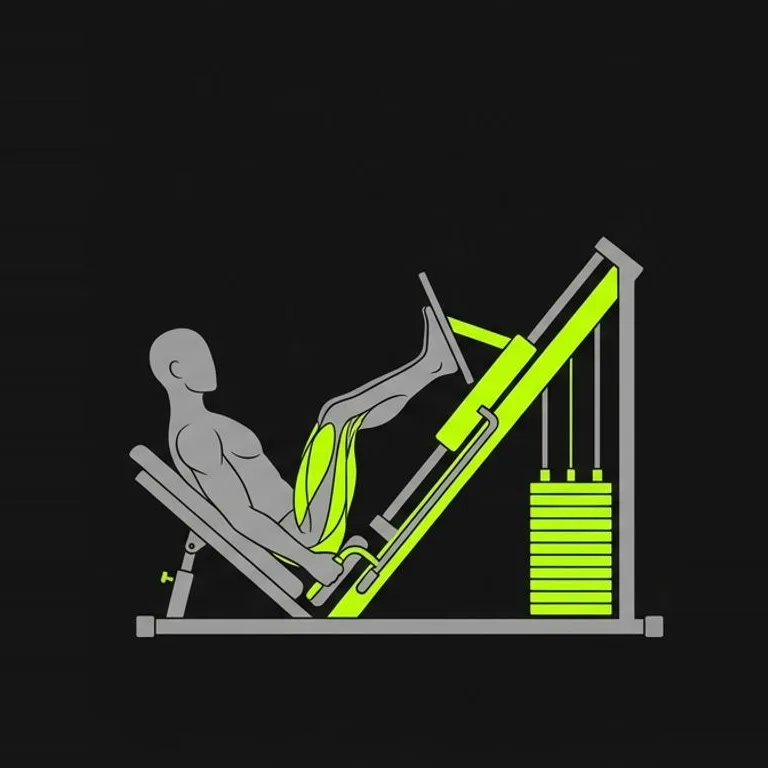
1 Set stance and brace hard
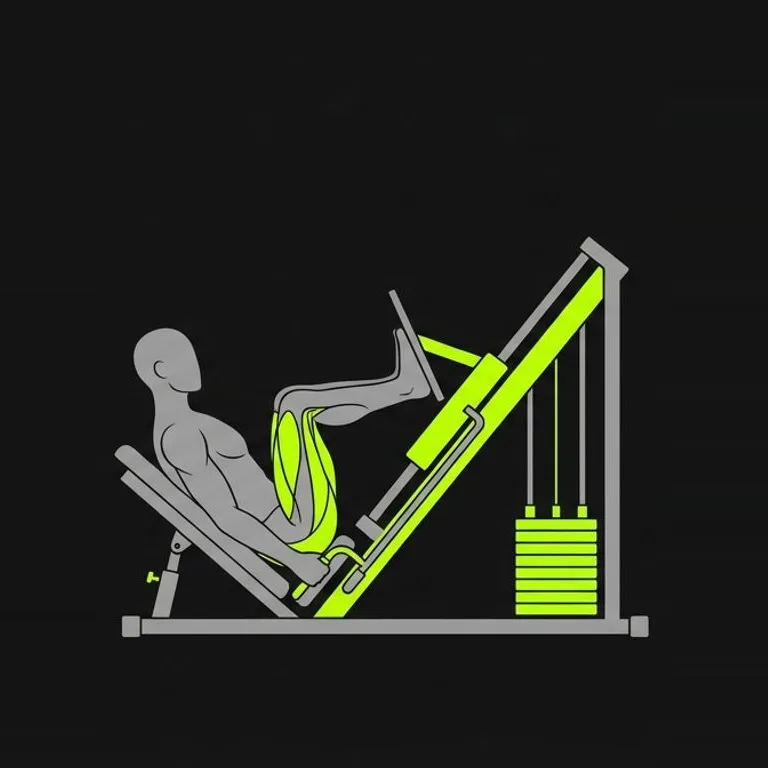
2 Descend to depth under control
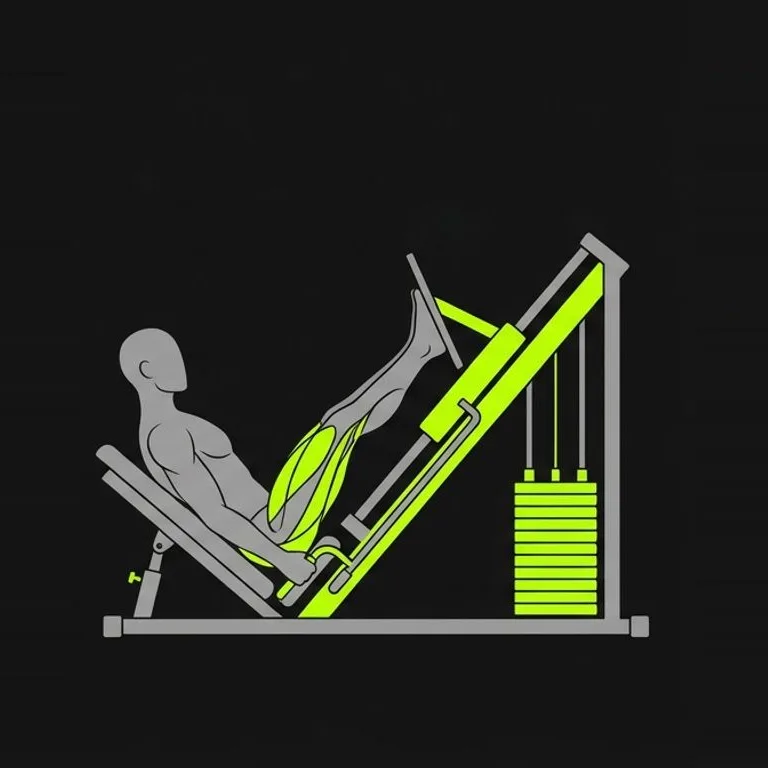
3 Drive up through mid-foot
- Legs: the leg press and the goblet squat train the thighs and hips with the back supported or the load held close.
- Back: the lat pulldown builds the pulling strength that helps posture and everyday lifting.
- Shoulders and chest: the dumbbell shoulder press and a machine chest press let each side move freely.
- Arms: the triceps pushdown and a curl round out the week once the bigger lifts are in place.
- Lateral raises with light dumbbells, for shoulders that carry bags and lift boxes more easily.
Each lift is programmed with a rep range and a rest time. The leg press, for example, runs at 10–15 reps a set with 90 seconds of rest. Start every exercise at a weight you could lift a few more times than the bottom of the range, and add load only when every set reaches the top.
Does it work the same for women?
Yes. The same age factor applies, and women's absolute rates are about half of men's at every age, so the kilograms are smaller while the shape of the progress is the same. The example woman in her fifties adds 0.4 kg (0.9 lb) of muscle by month six on a recomp and 0.9 kg (2.0 lb) by month twelve, with the same weight of fat coming off.
Strength rises faster than those figures suggest, especially in the first months, because much of early strength comes from learning the movements. For many women starting in their fifties, that strength is the main goal: carrying, lifting and climbing with less effort. Muscle is the long-term support for it.
How do you start lifting safely after fifty?
- Check in with your doctor first if you have a heart, joint or other health condition, take regular medication, or have not exercised in years.
- Learn each movement light. The first weeks are for technique. The weight on the bar matters far less than how it moves.
- Leave reps in the tank. Finish most sets with a couple of reps you could still do. Month6 records how hard each set felt and uses it when deciding whether to add load.
- Add load in small steps. On a barbell the step is 2.5 kg (5 lb), and machines and dumbbells move in small steps too. Small and regular beats big and occasional.
- Stop if something hurts, and pick a swap. Every exercise page lists alternatives that train the same muscles a different way.
Protein supports the work too. On a recomp, Month6 sets it at 2 g per kg of body weight a day, and the protein guide shows the figure for your weight. Spread it across your meals rather than saving it for dinner.
Questions
Example bodies are invented; every figure is an estimate for healthy adults, not medical advice. How every number is made, with its citations: Sources & method.