How do you do a hammer curl and what does it work?
Rep range, rest and load step from the Month6 exercise catalog; last updated .
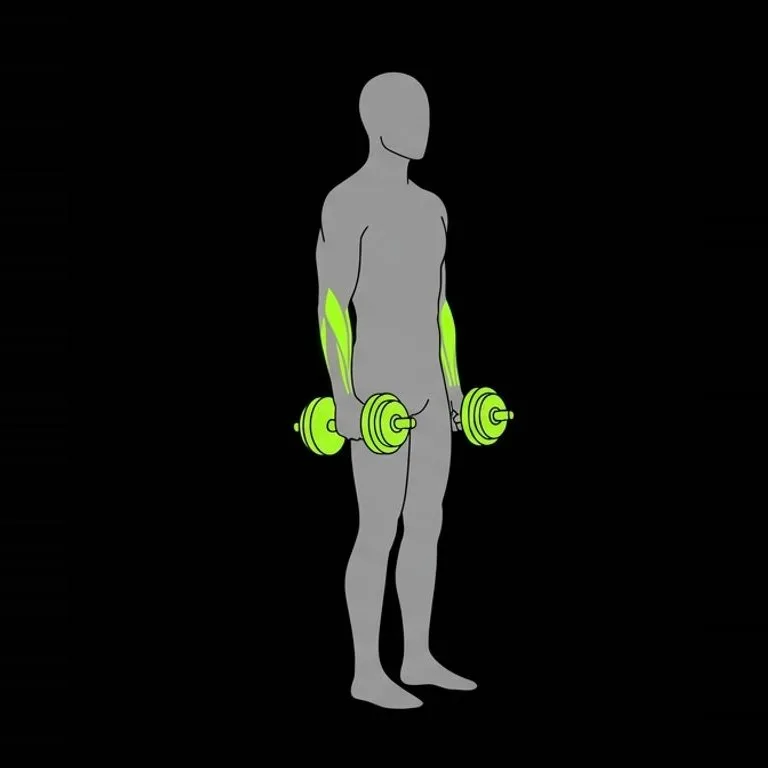
1 Set elbows and brace
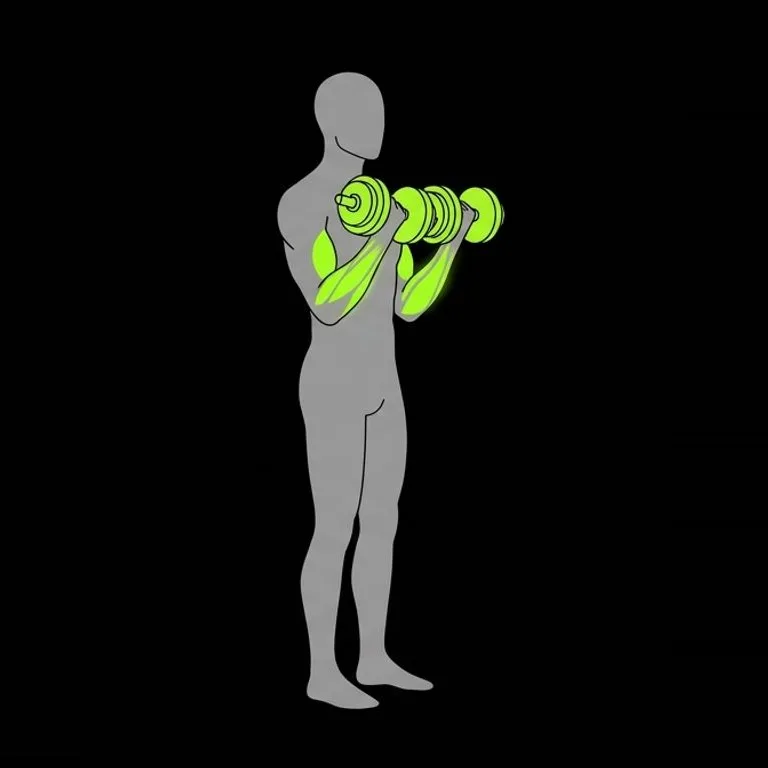
2 Move through the full range
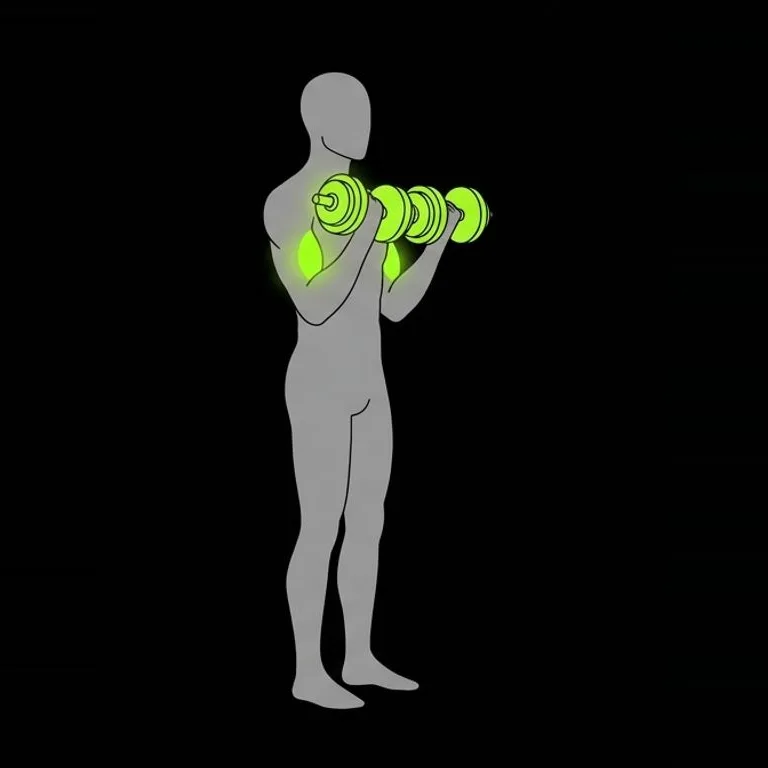
3 Squeeze, then lower slowly
Hammer curl at a glance
| Hammer curl | |
|---|---|
| Primary muscles | brachialis, brachioradialis (top of the forearm) |
| Also works | biceps, forearm and grip muscles |
| Equipment | Dumbbells |
| Rep range | 10–15 reps |
| Rest between sets | 60 seconds |
| Load step | 1 kg (2.5 lb) |
The hammer curl is a dumbbell curl with your thumbs pointing up. Your palms face each other from the bottom of the rep to the top, the same way you would hold a hammer to drive a nail. That one change in grip shifts the effort. The biceps still help, but the brachialis, a thick muscle lying underneath them, and the brachioradialis along the top of the forearm take a much bigger share of the load.
Lifters use it for that reason. Building the brachialis pushes the biceps up and out, so the upper arm looks thicker from the side, and the forearm work shows below the elbow. The neutral grip is also friendlier to the wrists than a palms-up curl for many people, and most lifters can move a little more weight with it. It fits neatly at the end of a pull day or an arm session, either alongside a regular curl or in its place.
How to set up
- Choose dumbbells you can lift for the full set without rocking your torso. Because the grip is stronger, you may handle slightly more than on a palms-up curl, but start conservatively until the movement feels familiar.
- Stand with your feet under your hips and a slight bend in your knees. Tighten your midsection enough that your ribs stay down and your back stays still.
- Hold the dumbbells at your sides with your palms facing your thighs and your thumbs toward the front. Wrap your fingers fully around the handle so the weight sits in the middle of your hand.
- Rest your upper arms against your sides with your shoulders relaxed and pulled slightly back. From here, only the elbow should bend.
How to do the hammer curl
- Curl one or both dumbbells up by bending the elbow, keeping your palms facing in the whole way. The dumbbell travels in a straight arc in front of your body, thumb leading, with no rotation of the wrist.
- Lift until your forearm is about vertical and the top end of the dumbbell is near the front of your shoulder. Hold the top for a moment and feel the top of the forearm and the outside of the upper arm working.
- Lower slowly until the elbow is straight again. Keep the grip neutral on the way down too; letting the palm turn in or out changes the exercise halfway through the rep.
- You can also curl the dumbbell across your body toward the opposite shoulder. That cross-body path is a common variation that some people find more comfortable on the elbow, and it trains the same muscles.
- Breathe out as the weight rises and in as it comes down. Reset your stance between reps if your torso starts to drift.
Cues that help
- Thumbs to the ceiling. Pointing the thumbs up keeps the grip neutral through the rep, which is what makes the brachialis and forearm do the lifting.
- Hold it like a hammer, not a cup. A firm, centred grip lines the forearm up behind the handle so the weight does not tip forward and strain the wrist.
- Elbow stays home. Keeping the elbow beside the ribs stops the shoulder from lifting the dumbbell and keeps the tension on the arm.
- Open the elbow all the way. Finishing each rep with a straight arm trains the full length of the muscle and keeps each rep the same, so progress is honest.
Common mistakes
- Rotating into a palms-up curl as the weight rises. Lock the grip neutral from bottom to top. If you want the twist, that is a regular dumbbell curl, not a hammer curl.
- Rocking the hips to start each rep. Lighten the dumbbells and pause briefly at the bottom of each rep so momentum cannot carry the next one.
- Letting the dumbbell's head drop toward the floor. Squeeze the handle and keep the wrist straight, so the dumbbell stays vertical and the forearm takes the load in line.
- Shoulders rolling forward at the top. Stop the curl when your forearm is vertical. Pulling the elbow up and forward to finish only adds shoulder work.
Who it suits
The hammer curl suits lifters who want thicker arms and stronger forearms, and anyone whose wrists dislike a palms-up curl. It is a simple movement that a beginner can learn in one session, and it gives experienced lifters a second curl that loads the arm differently.
If the elbow or wrist feels wrong during the lift, stop and swap. A standard dumbbell curl trains the biceps more directly, a cable keeps steady tension, and a chin-up trains the arms as part of a full pull.
How Month6 progresses it
Month6 starts the hammer curl at the bottom of its range, 10 reps, and adds reps session by session until every set reaches 15.
When every set of the hammer curl reaches the top of the range, the load goes up by the smallest sensible step for it — 1 kg (2.5 lb) — and the reps start again from 10.
Rest on the hammer curl is 60 seconds: an isolation or bodyweight movement recovers quickly.
Like any curl, the hammer curl climbs in small amounts. You will usually add reps at one weight for a few sessions before the next dumbbell feels right, and that is how a small muscle group gets stronger.
Your grip often improves before your arms do, so the forearms may tire first in a set. That is fine. Keep each rep strict and move up only when you can finish the top of the range without the hips helping.
Swaps
- Dumbbell curl Take the regular dumbbell curl when you want the biceps to do more of the work. Turning the palms up puts the biceps in its strongest position for bending the elbow.
- Cable curl Take the cable curl when the dumbbells are taken or you want tension that stays even through the whole rep. A rope attachment lets you keep the neutral grip on the cable.
- Chin-up Take the chin-up when you want a bigger pull that trains the arms and back together. It is a good choice when time is short and you can only fit in one arm-heavy movement.
Questions
Related exercises
More arms exercises: Arms · the whole library
Technique guidance for healthy adults, not medical advice; stop if a movement hurts. How every number is made, with its citations: Sources & method.
Log it, and let the plan move with you
Month6 logs every set of the hammer curl in one tap, offers the swap when the station is taken, and adds load when you reach the top of the range.